“Mold removal” and “mold remediation” are often used interchangeably, including by companies within the same industry, but they describe slightly different scopes of work. This article explains what each term technically means, why the distinction matters less than people often assume in practice, what a proper remediation process actually includes beyond just removing visible mold, and how to evaluate what a company is actually offering regardless of which term they use.
Table of Contents
Why This Terminology Confuses People
Searching for services in Singapore turns up both terms used constantly, sometimes by the same company on the same page. That’s not necessarily a red flag or an inconsistency — in everyday use, “removal” and “remediation” have largely converged, even though they originated as terms with slightly different technical meanings. Understanding the distinction is useful less for choosing the “correct” search term and more for understanding what should actually be included in the work, regardless of what it’s called.
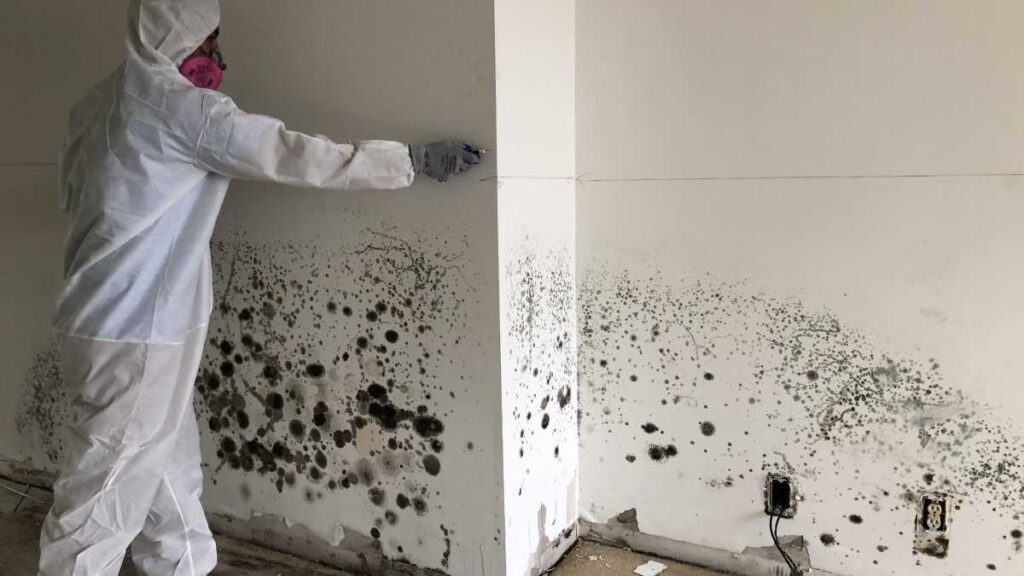
What “Mold Removal” Technically Means
In its narrowest sense, refers to the physical act of removing visible from a surface – cleaning, scrubbing, or treating an affected area to eliminate what’s currently visible. Taken literally, this doesn’t necessarily include identifying or fixing the underlying moisture source that caused the mold in the first place.
What “Mold Remediation” Technically Means
Remediation is the broader term, generally understood to include the full process: inspecting the property, identifying the moisture source, removing the itself, treating the affected area to prevent regrowth, and often addressing the conditions that allowed the to develop in the first place. In industries like water damage restoration, “remediation” is the standard term for this complete process, which is part of why it’s become the more commonly used term for serious or recurring problems.
Whether a company calls it removal or remediation, what actually matters is whether the process addresses the moisture source, not just the visible. A proper inspection is the first step in either case. Book a inspection with Mold Free.
Where These Terms Actually Come From
The distinction has its roots in the broader restoration industry, particularly water damage and disaster restoration, where “remediation” became the standard term for the complete process of addressing contamination – assessing the extent of a problem, removing the contaminant, and restoring the affected area to a safe condition. “Removal” is the older, more literal term, and it’s still commonly used across many cleaning and pest-control-adjacent industries to describe the physical act of taking something away or eliminating it.
Mold services inherited both terms because mold work sits at the intersection of general home cleaning (where “removal” is the natural word) and structural restoration (where “remediation” is the established industry term). Neither term is more “correct” than the other – they simply came from different professional traditions that ended up describing overlapping work.
The Real Difference: Scope, Not Just Wording
| Removal (narrow definition) | Remediation (broader definition) | |
| Focus | Visible mold on a surface | Full problem, including root cause |
| Typical scope | Cleaning or treating what’s visible | Inspection, moisture source, mold treatment, prevention |
| Best suited for | Small, isolated, clearly-caused patches | Larger, recurring, or unexplained mold problems |
| Risk if used alone | Mold can return if moisture cause isn’t fixed | Lower recurrence risk when done properly |
Quick answer: Removal, strictly defined, is about eliminating visible mold. Remediation is about resolving the underlying problem so it doesn’t return. In practice, most professional services labeled “mold removal” today actually include remediation-level work – which is exactly why the terms have blurred together in common usage.
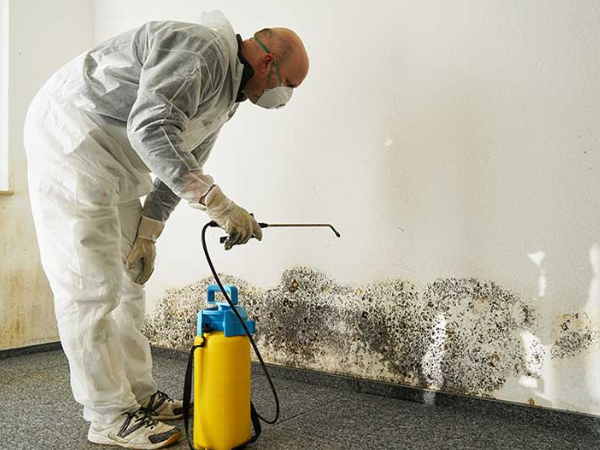
Why the Terms Are Often Used Interchangeably
Most professional mold companies, including in Singapore, don’t strictly separate these services in their day-to-day language, because in practice a proper job almost always needs to include both: you can’t responsibly remove mold without at least assessing why it’s there, and identifying the cause is a wasted step if you don’t then remove the mold and treat the area. Marketing and search behavior also play a role — “mold removal” tends to be the more commonly searched term, while “remediation” is often used in more technical or industry-facing contexts, so companies frequently use both terms to describe what is functionally the same comprehensive service.
What a Proper Remediation Process Actually Includes
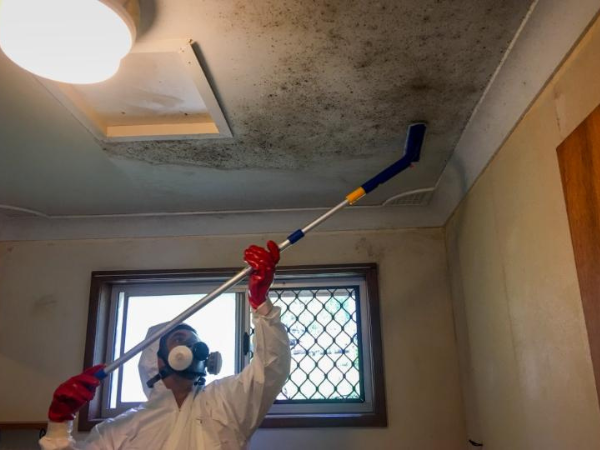
Regardless of which term a company uses, a properly scoped job for anything beyond a trivial surface patch should generally include:
- Inspection — Identifying the extent of the mold and the likely moisture source, often using tools like moisture meters or thermal imaging
- Containment — Preventing spores from spreading to unaffected areas during the work, particularly important for larger jobs
- Removal or treatment — Physically addressing the itself, using appropriate methods for the affected material
- Cleaning and sanitization — Treating the surrounding area to reduce residual spores and odor
- Prevention measures — Addressing the moisture source and, where appropriate, applying treatments that reduce the likelihood of recurrence
This is close to the structure most established mold service providers use, even when only one of the two terms appears in their marketing.
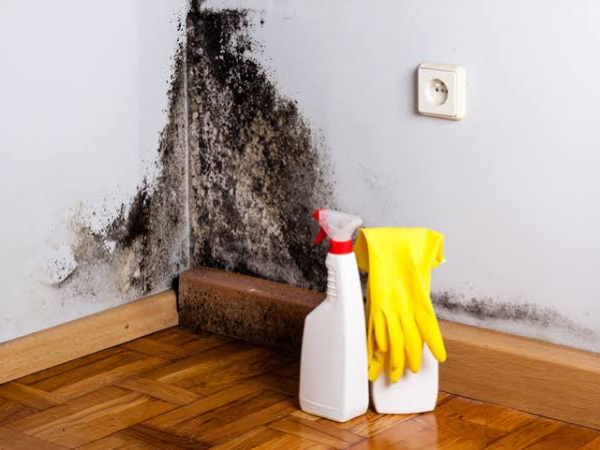
When “Removal Only” Might Genuinely Be Enough
For very small, isolated, surface-level mold with an obvious and easily fixed cause — for example, a small patch that developed because a wardrobe was blocking airflow, and the airflow issue has already been resolved — straightforward cleaning may be sufficient without a full remediation-level process. The key factors that suggest removal alone might be enough are: the affected area is small and contained, the cause is clear and has already been addressed, and there’s no reason to suspect hidden or spreading growth behind the visible surface.
How This Plays Out Differently in Commercial vs. Residential Contexts
In commercial settings — offices, schools, warehouses, retail spaces — “remediation” tends to be the more commonly used term, partly because commercial mold issues are more likely to involve compliance considerations, larger-scale structural work, or documentation requirements for insurance or building management. A commercial property manager describing a scope of work to stakeholders is more likely to use “remediation” because it signals a complete, documented process rather than a quick cleanup.
In residential settings, “removal” is often the term homeowners search for and use in conversation, simply because it’s the more intuitive, everyday word for “getting rid of the mold.” This doesn’t mean residential jobs are any less thorough — it’s primarily a difference in how people talk about the problem, not a difference in what a reputable company should actually deliver.
What a Warranty or Guarantee Should Actually Cover
Regardless of which term is used, one of the more meaningful ways to evaluate a company’s process is what their warranty or guarantee actually covers. A guarantee against mold recurrence for a defined period — commonly framed around several months — is a reasonable indicator that a company is confident in having addressed the underlying moisture source, not just cleaned the visible mold. When comparing quotes, it’s worth asking specifically:
- Is the guarantee against recurrence in the same treated area, or does it cover the whole property?
- What would void the guarantee — for example, a new, unrelated leak versus the original problem returning?
- Is a follow-up visit included if mold does return within the guarantee period?
A vague or undefined guarantee is often a bigger red flag than which terminology a company uses on its website. For a deeper look at what actually determines whether mold returns after treatment and how recurrence warranties work in practice, see our dedicated guide on whether mold can come back after removal.
Common Misconceptions About These Terms
“Remediation always costs more than removal.” Not necessarily. Since most companies use the terms to describe largely the same process, pricing is driven more by job size and severity than by which word is used in the quote.
“If a company only says ‘removal,’ they’re cutting corners.” Not automatically true. Many companies that use “removal” as their primary marketing term still follow a full inspection-to-prevention process — the word choice often reflects search and marketing habits more than the actual scope of work delivered.
“Remediation is only for serious, large-scale problems.” Remediation as a process (inspect, treat, prevent) is appropriate for most mold problems beyond a trivial, clearly-caused patch — it’s not reserved only for extreme cases.
What to Ask a Company, Regardless of Which Term They Use
Rather than choosing a provider based on which term appears on their website, it’s more useful to ask directly:
- Does the process include identifying the moisture source, or just treating what’s visible?
- What happens if the mold has spread beyond the visible area?
- Is there any warranty or guarantee against recurrence, and what does it cover?
- What steps are taken to prevent the mold from coming back?
- Is a written report or assessment provided after inspection?
A company confident in its process should be able to answer these clearly regardless of whether they call the service “removal” or “remediation.”
FAQs about Mold Removal vs Remediation
Is mold remediation more expensive than mold removal?
Not necessarily, since most companies use the terms to describe largely the same comprehensive process. Cost depends more on the size, severity, and location of the mold problem than on which term is used to describe the service.
Do I need remediation, or is removal enough for a small patch?
For a small, isolated patch with an obvious and already-resolved cause, straightforward removal can be enough. Larger, recurring, or unexplained mold problems benefit from the fuller remediation process, including identifying the moisture source.
Why do some companies use both terms on the same page?
Because in practice, a properly done job includes both identifying the cause and removing the mold — the two aren’t really separable in professional service delivery, even though the words originated with slightly different technical meanings.
Does remediation always include testing?
Not necessarily. Testing (air or surface sampling) is a separate service that may or may not be included, depending on the situation and whether species identification or clearance testing is needed.
What’s the risk of choosing “removal only” for a bigger problem?
If a moisture source isn’t identified and addressed, mold removed from a visible surface can return, since the underlying conditions that allowed it to grow haven’t changed.
Is there an industry-standard definition that separates these terms in Singapore?
Not a strict, universally applied one. Most companies, including internationally, use the terms with significant overlap, which is why evaluating the actual scope of work matters more than the specific term used.
Why do commercial mold companies use “remediation” more often than “removal”?
Commercial mold work more frequently involves documentation, compliance considerations, and larger-scale structural work, all of which “remediation” more naturally conveys as a complete, accountable process — though this is more a convention of how the work is described than a strict rule.
What should a warranty against mold recurrence actually cover?
At a minimum, it should specify how long it lasts, whether it covers the same treated area or the whole property, what would void it (such as an unrelated new leak versus the original problem returning), and whether a follow-up visit is included if mold reappears within the covered period.
Learn About Mold
-
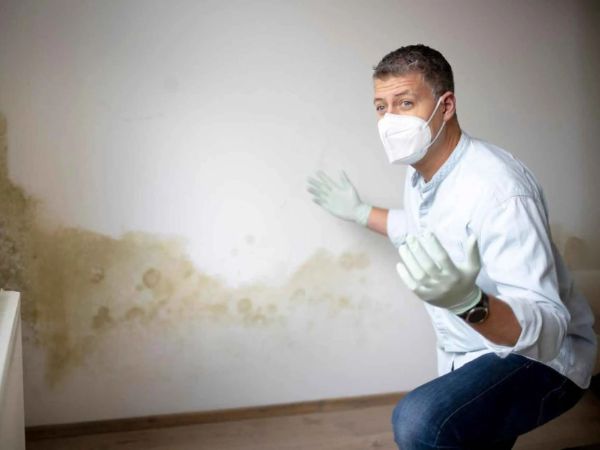
Can Mold Come Back After Removal?
-
How Long Does Mold removal Take?
-
Mold Removal vs Mold Remediation
-
Mold Around Windows: Causes and Prevention