The need for professional disinfection in Singapore goes beyond routine cleaning.
Germs, viruses, and fungi can spread quickly in offices, homes, and shared spaces. The stakes are especially high when outbreaks, viral exposures, or contamination have occurred.
Why is professional disinfection so critical in Singapore?
Here are just a few scenarios where professional disinfection is needed in Singapore:
- A colleague tests positive for COVID-19 or another infectious illness
- Mold and mildew appear in damp corners after heavy rain
- A childcare centre or tuition classroom faces a hand, foot and mouth (HFMD) outbreak
- After a renovation, airborne dust or chemical residues linger in a condo or office
- You simply want peace of mind in a home or workspace that sees many visitors
In such moments, professional disinfection is the safest way to restore a healthy environment and help you feel secure again.
Request a same-day assessment for disinfection.
The professional disinfection process in Singapore
Professional disinfection is a meticulous, step-by-step process.
The goal of disinfection isn’t just to “kill germs,” but to follow a scientific, systematic approach that complies with NEA and MOH guidelines. Whether it’s a HDB flat, office, industrial facility, or preschool, every site has to be treated with care and professionalism.
Step 1 – Preliminary assessment and planning
Our disinfection process is suited for Singapore, and begins with a detailed site survey. Our team of technicians inspects your premises to spot high-touch surfaces like:
- door handles
- switch plates
- lift buttons
We then identify porous and non-porous materials.
This is important since each type of surface needs a specific cleaning and disinfection approach for a lasting effect.
For a post-incident job, we make a list of exposed areas and prepare a customised disinfection plan.
Many times, an area has to be cleared before disinfection can begin. In such cases, we follow Singapore NEA and MOH’s disinfection protocols.
Choosing the right cleaning method comes next.
We spray and wipe smaller, flat surfaces. ULV (Ultra Low Volume) misting is used to cover larger rooms. UV-C light is used in small, hard-to-reach spots, depending on the layout.
Only NEA-approved disinfectants are used, like quaternary ammonium compounds and sodium hypochlorite. These are diluted according to manufacturer guidelines.
If needed, we then instruct our clients to move their belongings, cover or remove food, and keep pets and people outside during the cleaning process.
Next, we post warning signs and start cleaning from the farthest point of the room, working our way to the exit. This is done to prevent recontamination.
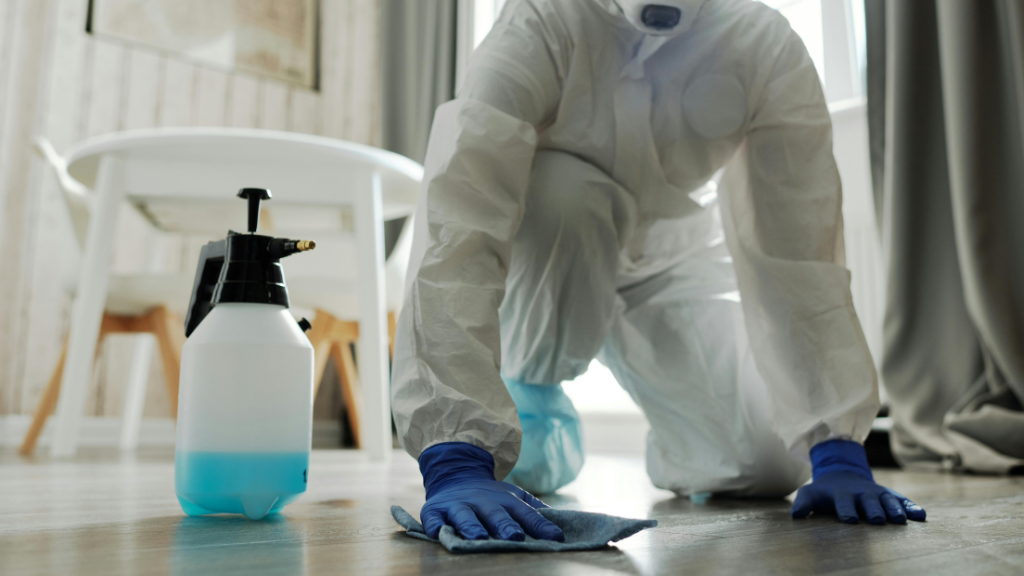
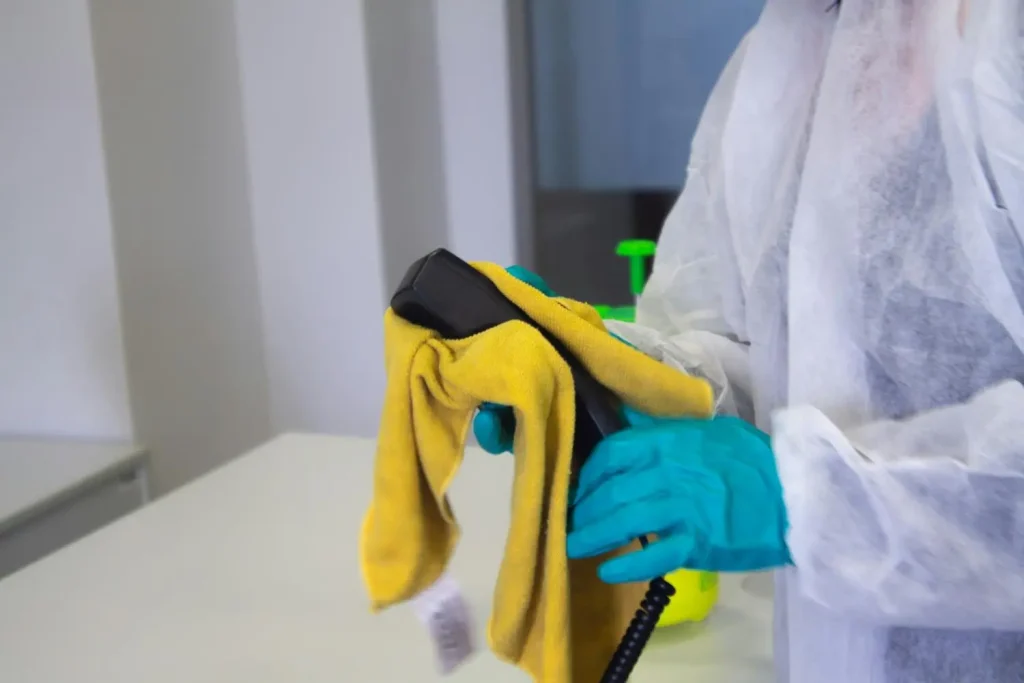
Alt text: Professional disinfection technician wearing PPE with yellow gloves and cleaning equipment in Singapore
Step 2 – Setting Up with PPE and Room Preparation
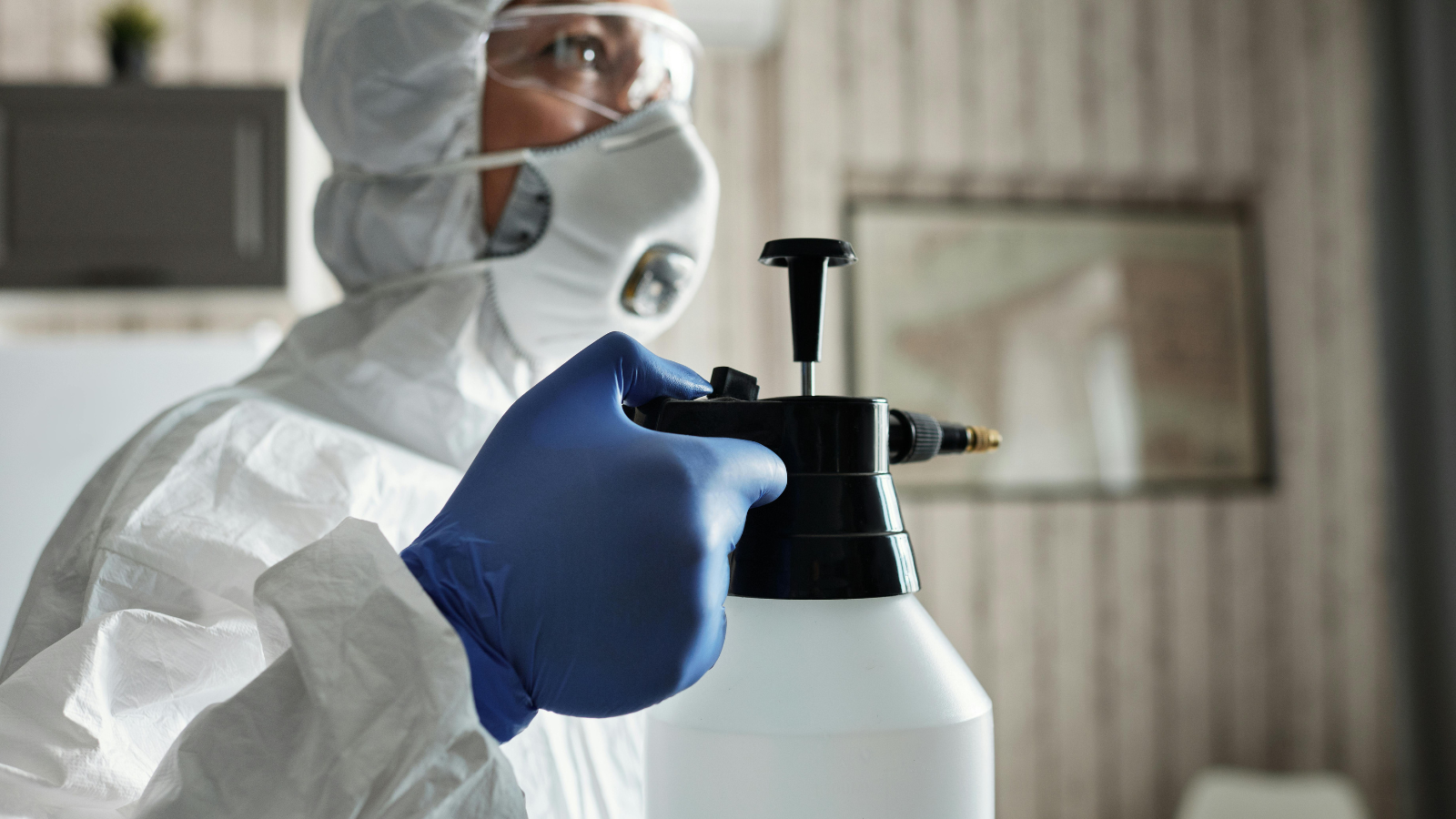
Before disinfection begins, our technicians put on PPE, which includes
- gloves,
- N95 respirators, and
- eye protection.
In higher-risk areas, we also use
- disposable coveralls,
- shoe covers, and
- full-face respirators.
This is done to keep both workers and the environment safe from contamination.
We begin by securing the room.
Central air conditioning is shut down to stop any chemicals from becoming airborne. Clear plastic sheeting is taped across doorframes, and signs go up to block entry.
To keep the disinfectant contained, we carefully control ventilation. Some chemicals need fresh air to control fume buildup; others need the opposite. Negative air machines may be brought in to move air in the desired direction.
Before we disinfect, we look for dirt.
Spot cleaning with soap and water comes first since dirt hides germs. If organic matter is on the surface, the disinfectant’s power is blocked. Sensitive items like computers, folders, and any kind of document are either covered with plastic sheeting or taken to the clean room.
If we detect mist during the process, we protect the smoke detector to keep alarms quiet. We skip bleach on anything that can rust. Alcohol-based wipes go on metal items to keep corrosion away.
Step 3 – Surface disinfection (wipe down)
In this phase of the disinfection process, our cleaning crews move in and begin with high-contact areas like
- door handles,
- faucet knobs,
- elevator buttons,
- light switches,
- keyboards, and
- armrests.
Our technicians carry three colour-coded microfiber cloths to prevent germs from spreading between zones. One wipes the handle, one docks the disinfectant, and one is reserved for a final moist cleaning.
When it comes to disinfecting, details matter.
We clean surfaces in a single swipe to stop germs from bouncing back.
We also follow the “wet and leave” rule, leaving the disinfectant on for typically 5 to 10 minutes for it to work properly.
Sprayers are held 6 to 8 inches away so that the disinfectant forms a fine, even mist.
The correct cleaning path is always from top to bottom. We start with shelves and window grills, then move to tables, chairs, and finally, the floors. Areas like bathrooms and kitchens always get more focused attention.
We also take care to disinfect
- flush handles,
- sink taps,
- counters, and
- floor drains in the ladies’ and gents’ restrooms.
For fabric upholstery, we use a fabric-safe spray or use steam at a high temperature to disinfect.
Step 4 – Using Advanced Methods: Fogging, Misting & Air Treatments
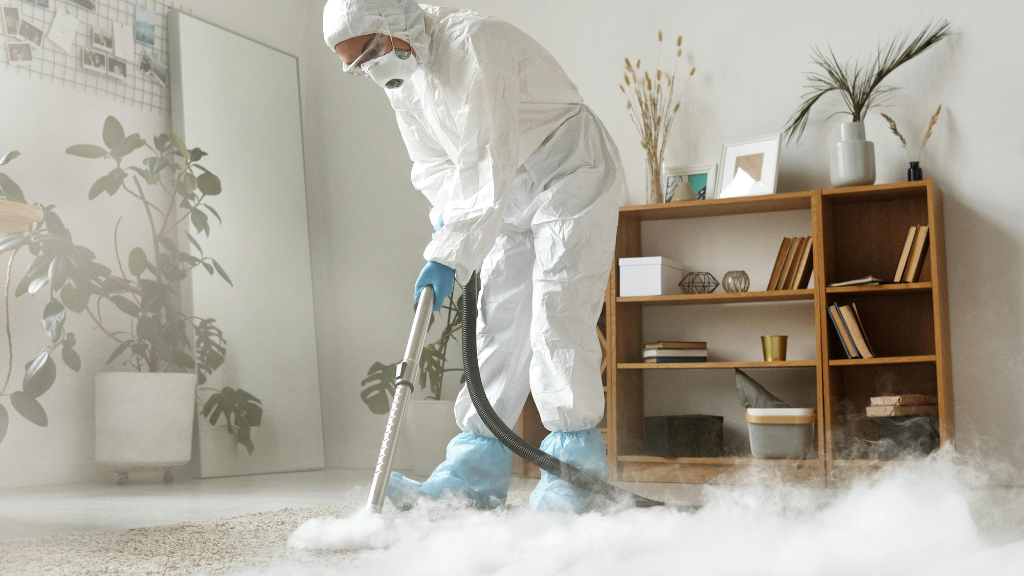
After manual cleaning is done, we use ULV fogging to mist a fine cloud of disinfectant into the room. This mist quietly settles into hard-to-see cracks and underneath furniture. We normally use quats or hydrogen peroxide for this. We have found in our experience that fogging works really well in places like daycare centres or cluttered offices.
Electrostatic sprayers can also be used where suitable to provide a huge boost to cleanup routines. These machines zap disinfectant droplets with a positive charge, so they cling to surfaces rather than bouncing off. This is a huge timesaver compared to manual spray-and-wipe.
To capture airborne pathogens, our team uses HEPA scrubbers. They capture 99.97% of particles, including bacteria and some viruses. Many of these machines now come with UV lamps that zap germs even faster.
After fogging, there may be a second round of treatment needed.
We may use ozone machines or hydroxyl generators to gently clear lingering germs and odours. This is especially a good idea for rooms exposed to spills, rodents, or spoiled food.
A small amount of UV-C light helps us complete the disinfection process effectively.
UV-C lamps require direct line-of-sight. They are commonly used in medical settings or quarantine rooms and follow strict safety protocols to vacate rooms during treatment.
Striking microbes with short, intense bursts of UV-C light inactivates them right on the countertop or in the air.
Step 5 – Post-disinfection cleanup
After the disinfectants have settled and the fogging time is over, the space needs a lot of fresh air.
So, windows are opened and exhaust fans are switched on to remove lingering mist and chemical scents.
This is vital when stronger agents like bleach or ozone are involved.
Next, chemical residues are wiped off kitchen counters and other high-touch surfaces.
Used PPE, soiled cloths, and disinfectant wipes are sealed in biohazard bags for safe disposal.
If the cleanup involves blood, high-risk pathogens, or unionised biohazard materials, this waste is incinerated in a controlled biohazard facility. Otherwise, the waste is trucked out for safe land disposal.
Leftover chemicals are recycled or disposed of according to local regulations.
Once the area is clear of waste, the crew returns furniture and other items to their original places.
Protective coverings on sensitive electronics are removed, sometimes followed by a final wipe.
Lights are turned off and doors are locked.
Where suitable, we add fragrance additives to our disinfectants to leave a fresh and pleasant scent after service.
Step 6 – Verification and certification
One of our supervisors performs a final walkthrough using a detailed checklist to confirm that no surface has been omitted. In high-sensitivity areas, ATP testing devices may be used to measure surface cleanliness. If a site’s reading exceeds safety thresholds, re-cleaning is performed right away.
In some cases, follow-up tests may include
- lab culturing of swabs taken post-cleaning or
- indoor air quality checks to gauge microbial concentrations
Typically, these checks are only done in critical sites, like food processing plants or large outbreak situations.
We also hand out official disinfection certificates. These records share
- the date of the treatment
- the chemicals used (with NEA stamp of approval), and
- the names of the technicians involved
These documents help reassure workers, clients, and tenants that the space is really sanitised.
During client handover, our crew explains post-disinfection precautions. The usual tips include
- not using the treated space for a while to allow complete airing,
- suggesting maintenance schedules that keep the area safe over the long term
Why trust a professional for disinfection in Singapore?
Professional disinfection is a systematic, science-backed procedure designed to create truly safe spaces.
We blend thorough manual cleaning with high-tech misting, air scrubbing, and careful checks to deliver the perfect disinfection solutions.
Request a rapid, MOH-compliant disinfection.
FAQs – Frequently Asked Questions about Disinfection
- What is included in the professional disinfection process?
In line with NEA guidelines, the process includes
- a site assessment,
- the wearing of PPE,
- surface cleaning,
- ultra-low-volume (ULV) fogging,
- air purification,
- post-cleanup checks, and
- final verification
2. How is disinfection service in Singapore regulated?
To ensure that sanitation is safe and effective across all types of premises, services must
- follow NEA and MOH rules,
- use only approved disinfectants,
- stick to standard methods of disinfection.
3. What should I expect from an office disinfection service in Singapore?
A thorough office service includes:
- cleaning touchpoints,
- ULV fogging the whole room,
- using HEPA air scrubbers,
- concluding with a certification that meets Singapore’s standards.
4. What are the key NEA disinfection guidelines to follow in Singapore?
To achieve sanitising that’s both thorough and safe, NEA guidelines specify
- using only certified disinfectants,
- enforcing the right contact times,
- ensuring proper safety gear, and
- following strict ventilation rules.
5. How is disinfection done by professional companies?
Disinfecting companies deploy advanced gear like ULV foggers and electrostatic sprayers. They also strictly follow recommended dwell times, so pathogens are wiped off surfaces and from the air.
6. What is the ULV fogging procedure?
ULV fogging delivers a super-fine mist, allowing the disinfectant to coat even those hidden spaces. This way, every square inch is treated, and viruses stand little chance of surviving.
7. Can professional disinfection be done after a COVID case?
Yes, it absolutely can be done. Trained teams implement MOH protocols for COVID. They cover every inch of a room to eliminate the risk of the virus spreading in workplaces or homes.