
Singapore’s climate makes mold a near-universal problem, not an occasional one. This article breaks down the science behind mold growth, the exact conditions it needs to survive, and the everyday habits, building features, and weather patterns that create those conditions in HDB flats, condos, and landed homes. It covers which areas of a home are most at risk, how fast mold actually spreads, common myths that lead people to misdiagnose the cause, and what’s realistic to prevent versus when the cause is beyond a DIY fix.
Table of Contents
- Why Singapore Homes Are Especially Prone to Mold
- Singapore’s Climate and Humidity Levels
- How Monsoon Seasons Change the Risk
- How HDB Flats, Condos, and Landed Homes Differ in Risk
- The 3 Conditions Mold Needs to Grow
- Moisture
- Warmth
- An Organic Food Source
- Common Causes of Mold in Singapore Homes
- Poor Ventilation
- Air-Conditioning Condensation and Drainage Issues
- Water Leaks and Undetected Pipe Damage
- Drying Laundry Indoors
- Cooking and Showering Without Extraction
- Rainy Season and Wall/Window Seepage
- Building Design and Construction Factors
- How Fast Does Mold Actually Grow?
- Which Areas of the Home Are Most at Risk?
- Common Myths About What Causes Mold
- Is Mold Growth Preventable?
- When the Cause Isn’t What You Think
- FAQs
Why Singapore Homes Are Especially Prone to Mold
Mold isn’t a rare problem in Singapore — it’s closer to a default condition. Homes here don’t need a flood or a burst pipe to develop mold. Ordinary daily life, combined with the climate, is often enough to supply everything mold needs to establish itself and keep coming back.
If mold keeps showing up in the same spot no matter how often you clean it, the cause is usually hidden — not on the surface. A professional inspection can pinpoint the actual moisture source before you spend more time and money treating the symptom.
Singapore’s Climate and Humidity Levels
Singapore’s average outdoor relative humidity sits around 82% year-round. That’s already above the level where mold spores can activate on a damp surface, and indoor humidity often tracks close behind outdoor levels unless a home is actively dehumidified or well air-conditioned. Add consistent heat above 25°C, and you have two of the three ingredients mold needs, supplied by the weather itself, every single day, regardless of how careful a household is.
This is also why mold problems in Singapore aren’t seasonal in the way they are in temperate countries. There’s no true “mold season” here — the risk doesn’t disappear in any particular month, it just shifts in character depending on rainfall, monsoon winds, and how a home is being used at the time.
How Monsoon Seasons Change the Risk
Singapore’s weather is shaped by two monsoon periods, and each one changes how mold risk shows up at home rather than whether it exists at all.

- Northeast Monsoon (roughly December to early March) — Brings heavier, more sustained rainfall. Homes see more risk from external water ingress: window seals, roof flashing, and wall cracks that let rain seep into wall cavities.
- Southwest Monsoon (roughly June to September) — Generally drier with occasional sudden storms (Sumatra squalls). Risk shifts toward humidity swings and condensation, since air-conditioning use tends to be heavier during hotter, more humid stretches.
- Inter-monsoon periods — Shorter but intense afternoon thunderstorms are common, which can catch homeowners off guard with sudden window or balcony water intrusion.
None of this means mold risk is low outside these windows. It just means the dominant cause shifts — rain-driven seepage in one period, condensation and humidity swings in another.
How HDB Flats, Condos, and Landed Homes Differ in Risk
- HDB flats — Compact bathrooms with limited or no windows, shared wall structures, and older units with aging waterproofing membranes are common risk points. Many older blocks were also built before modern ventilation standards, which compounds the issue.
- Condominiums — Air-conditioning is used more heavily, which helps control humidity but creates its own risk through condensation and drainage issues if units aren’t serviced. Shared facade systems and expansion joints can also be a source of water ingress in older developments.
- Landed homes — Larger footprints mean more exposure to external moisture: roof leaks, ground-level dampness rising through foundations, and poorly ventilated storage, utility, or basement areas.
None of these property types are immune. The risk factors are simply different, which is why a one-size-fits-all prevention checklist doesn’t always work — the right response depends on the property type and its specific vulnerabilities.
The 3 Conditions Mold Needs to Grow
Mold isn’t random, and it isn’t caused by “bad luck” or poor housekeeping alone. It needs three specific conditions present at the same time, and removing any one of them slows or stops growth almost immediately.
| Condition | What It Looks Like at Home | Why It Matters |
| Moisture | Condensation, leaks, high humidity, damp laundry | Mold spores need water to germinate and spread; without it, spores stay dormant |
| Warmth | Singapore’s year-round tropical temperature | Mold grows fastest between roughly 20°C–30°C, a range Singapore sits in nearly all year |
| Food source | Dust, wood, drywall, fabric, grout, wallpaper glue | Mold feeds on organic material, not the surface material itself |
Quick answer: Mold needs moisture, warmth, and an organic surface to feed on. Singapore’s climate supplies the first two automatically — which is why controlling moisture indoors is the one variable homeowners can actually manage day to day.
It’s worth understanding what’s happening biologically, because it explains why mold reacts the way it does to cleaning and prevention efforts. Mold spores are present in almost all indoor and outdoor air, everywhere, all the time — they’re simply too small to see and mostly harmless while airborne and dry. The moment a spore lands on a damp surface with something to feed on, it can begin to germinate, sending out root-like threads called hyphae that anchor into the material and begin absorbing nutrients. Within days, those threads form the visible colonies most people recognize as mold. This is also why wiping away visible mold without addressing the moisture source rarely solves the problem — the spores that caused it are still present in the air, and the conditions that let them germinate haven’t changed.
Common Causes of Mold in Singapore Homes
Poor Ventilation
Bathrooms, kitchens, and storage rooms without windows or exhaust fans trap moisture instead of releasing it. Steam from showers and cooking has nowhere to go, so it settles on ceilings, walls, and cabinet surfaces, then slowly gets absorbed into paint, grout, and any porous material nearby. In many older HDB flats, internal bathrooms were built without windows at all, relying entirely on mechanical extraction that may be undersized, poorly maintained, or simply switched off by residents trying to save on electricity.

Air-Conditioning Condensation and Drainage Issues
Air-con units cool the air, but they also produce condensation as a byproduct. If drainage pipes are blocked, poorly sloped, or units aren’t serviced regularly, that moisture collects around vents, wall-mounted units, and nearby ceiling areas. This is a common but frequently overlooked cause of localized mold — homeowners often assume a leak from upstairs or a roof problem, when the actual source is condensation pooling inside the unit or dripping slowly behind a wall-mounted casing.
Water Leaks and Undetected Pipe Damage
Slow leaks behind walls, under sinks, or around window seals are one of the most common causes of mold that homeowners don’t notice until it’s already spread. Unlike a burst pipe, which is obvious and gets addressed quickly, a slow leak can feed mold growth for weeks or months before any visible sign appears on the surface — by which point the mold has often spread further than the original leak point, following moisture through wall cavities, along floor joists, or beneath skirting.
Drying Laundry Indoors
Common in HDB flats without external drying space, indoor laundry drying releases significant moisture into the air over several hours, especially in enclosed rooms with the door closed and no ventilation running. A single load of wet laundry can add a noticeable amount of humidity to a small room, and doing this regularly in the same space creates a repeating cycle of elevated humidity that mold thrives on.
Cooking and Showering Without Extraction
Daily activities — hot showers, boiling water, stir-frying — release moisture continuously throughout the day. Without an exhaust fan or open window, that moisture has nowhere to go except into walls, ceilings, and furniture. Over weeks and months, this steady, low-level moisture exposure is often more damaging than a single dramatic leak, simply because it never gives surfaces a chance to fully dry out.
Rainy Season and Wall/Window Seepage
During Singapore’s wetter months, water can seep through window frames, external wall cracks, expansion joints, or poorly sealed junctions between building materials, introducing moisture directly into wall cavities where mold can grow completely unseen for extended periods. This is particularly common in older buildings where waterproofing membranes have degraded or were never upgraded during renovations.
Building Design and Construction Factors
Some causes have nothing to do with homeowner habits at all. Thermal bridging — where a structural element like a concrete beam or column conducts heat differently from the surrounding wall — can create localized cold spots where condensation forms even in an otherwise well-ventilated room. Precast concrete panel joints, common in many HDB and condo developments, can also be a source of water ingress if sealant has aged or wasn’t applied correctly during construction. These structural causes are harder to identify without a proper inspection, because the mold that results can appear far from the actual entry point.
How Fast Does Mold Actually Grow?
Quick answer: Mold can begin colonizing a damp surface within 24 to 48 hours of exposure to moisture.
This is the detail that surprises most homeowners. A leak that isn’t dried out within a day or two can already have an active mold colony forming before it’s visible to the eye. That’s also why mold often reappears after cleaning — if the underlying moisture source hasn’t been fixed, new spores can establish themselves again within the same short window, sometimes within days of the original cleaning.
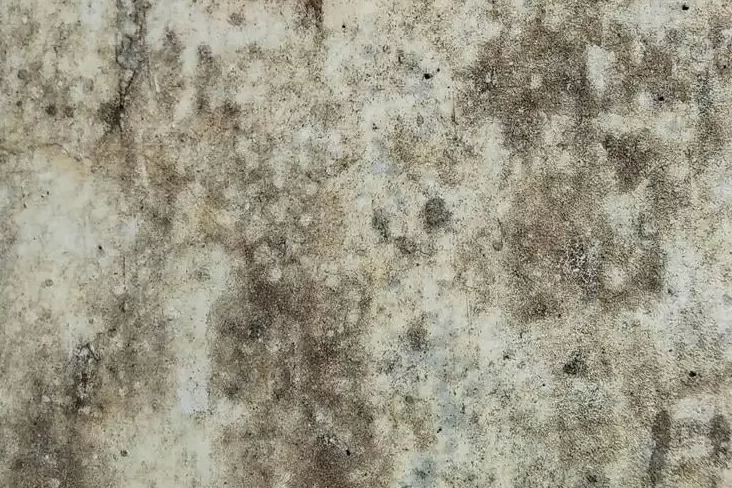
Hidden mold — growing behind wallpaper, under carpets, or inside wall cavities — is often more advanced than visible surface mold, simply because no one caught it early. By the time it becomes visible on a painted surface, it may have already been growing inside the wall for weeks. This is one of the reasons a musty smell without any visible mold shouldn’t be dismissed — smell can be the only early warning sign before visible growth appears, and it’s worth understanding what else commonly causes persistent household odours if mold isn’t the obvious explanation.
Which Areas of the Home Are Most at Risk?
- Bathroom ceilings and grout lines — Constant humidity with limited airflow, especially in windowless bathrooms. Ceiling mold has its own set of causes worth understanding in more depth — see our dedicated guide to ceiling mold
- Behind wardrobes and furniture — Poor air circulation against exterior or bathroom-adjacent walls, often made worse by furniture placed flush against the wall
- Window and wall corners — Common condensation points, especially in air-conditioned rooms where indoor and outdoor temperature differences are greatest. See our dedicated guide to mold around windows for causes specific to frames, seals, and sills
- Under carpets and behind wallpaper — Moisture gets trapped with no way to dry out, and both materials hide early growth from view
- Air-con units and surrounding walls — Condensation and drainage issues create a slow, repeating moisture cycle
- Kitchen cabinets under sinks — Frequently overlooked because leaks here are small and slow, hidden behind stored items
If mold keeps appearing in one of these specific spots despite cleaning, that’s usually a sign of a structural or ventilation issue rather than a one-off cleaning problem, and it’s worth treating it as a pattern rather than a series of unrelated incidents.
Common Myths About What Causes Mold
“Mold only grows where there’s visible water damage.” False. High ambient humidity alone, especially in a poorly ventilated room, can supply enough moisture for mold to grow without any leak, flood, or obvious water source at all.
“If I clean it, it won’t come back.” Cleaning removes visible mold, but not the underlying moisture cause. If that cause isn’t addressed, mold can return within days because the conditions that allowed it to grow the first time are still present.
“Air-conditioning prevents mold, so running it more is always better.” Partially true. Air-con lowers humidity, which helps, but poorly maintained units can themselves become a moisture source through condensation and blocked drainage — so the unit needs to be functioning correctly, not just running.
“New buildings don’t get mold.” Not accurate. New buildings can have elevated moisture from construction materials that haven’t fully cured, along with tighter, less naturally ventilated designs that trap humidity if mechanical ventilation isn’t used properly.
Is Mold Growth Preventable?
Not entirely — Singapore’s climate guarantees some baseline risk that no household can fully eliminate. But the causes homeowners can control make a meaningful, measurable difference in how often and how severely mold appears.
What actually helps:
- Keep indoor humidity below 60% where possible, using air-conditioning or a dehumidifier in poorly ventilated rooms
- Run exhaust fans during and after showers and cooking, and leave them running for a while afterward rather than switching off immediately
- Fix leaks as soon as they’re noticed, not after they visibly spread
- Avoid drying laundry indoors in enclosed rooms; if unavoidable, ventilate the space or run a dehumidifier at the same time
- Leave gaps between furniture and walls to allow airflow, particularly on exterior-facing or bathroom-adjacent walls
- Service air-conditioning units regularly, including drainage checks and filter cleaning
- Wipe down visible condensation on windows and walls promptly rather than letting it sit
When prevention isn’t enough: If mold returns repeatedly in the same area after cleaning, the cause is likely hidden — inside a wall cavity, behind a fixture, or in ductwork that isn’t visible during routine cleaning. At that point, a moisture assessment or professional inspection is usually more effective than continuing to treat the surface, because it identifies the actual source rather than the symptom. If a musty smell persists even after the visible mold is gone, professional odor removal addresses lingering spores and odor that surface cleaning alone often can’t reach.
When the Cause Isn’t What You Think
One of the most common mistakes homeowners make is assuming the cause of mold is whatever is closest to where it’s visible. Mold on a bedroom wall shared with a bathroom, for example, is often assumed to be a bathroom leak, when the real cause can be poor insulation causing condensation, or a completely unrelated plumbing issue several floors up in a shared wall system. Similarly, mold appearing near the floor isn’t always related to flooding — it can be rising dampness from ground moisture in landed properties, or a slow leak from a neighboring unit’s plumbing in condos and HDB flats.
This is why tracing the actual cause, rather than treating the nearest visible symptom, usually requires tools most households don’t have on hand — moisture meters, thermal imaging cameras, and experience recognizing patterns that don’t match the obvious explanation.
Frequently Asked Questions
1. What is the ideal indoor humidity level to prevent mold in Singapore?
Most guidance recommends keeping indoor relative humidity below 60%. Above that, mold spores have enough moisture to activate on suitable surfaces, especially when combined with Singapore’s typical indoor warmth.
2. Can mold grow without visible water damage?
Yes. High ambient humidity alone, especially in poorly ventilated rooms, can provide enough moisture for mold to grow even without a leak, flood, or obvious water source.
3. Why does mold keep coming back after I clean it?
Cleaning removes visible mold but doesn’t address the underlying moisture source. If the cause — a leak, condensation point, or ventilation gap — isn’t fixed, spores can recolonize the same area within days.
4. Does air-conditioning cause mold, or prevent it?
Both, depending on maintenance. Air-conditioning reduces humidity, which helps prevent mold. But condensation buildup from poorly drained or unserviced units can create localized moisture that causes mold near vents and wall units.
5. Is mold worse in HDB flats than in condos?
Not inherently — it depends on ventilation and building age more than property type. HDB bathrooms without windows are a common risk point, while condos face more air-con-related condensation issues.
6. How long does it take for mold to grow after a flood or leak?
Mold can begin forming within 24 to 48 hours of a surface staying wet, which is why fast drying after any water exposure is one of the most effective prevention steps.
7. Can opening windows make mold worse in humid weather?
It can, if outdoor humidity is higher than indoor humidity at the time — common in Singapore. Ventilation still matters, but pairing it with a dehumidifier or air-conditioning is more effective during peak humidity periods.
8. Does the mold’s location tell you where the moisture is coming from?
Not always. Mold often appears some distance from the actual moisture source, following water as it travels through wall cavities, floor joists, or shared building structures — which is why the visible location and the true cause don’t always match.