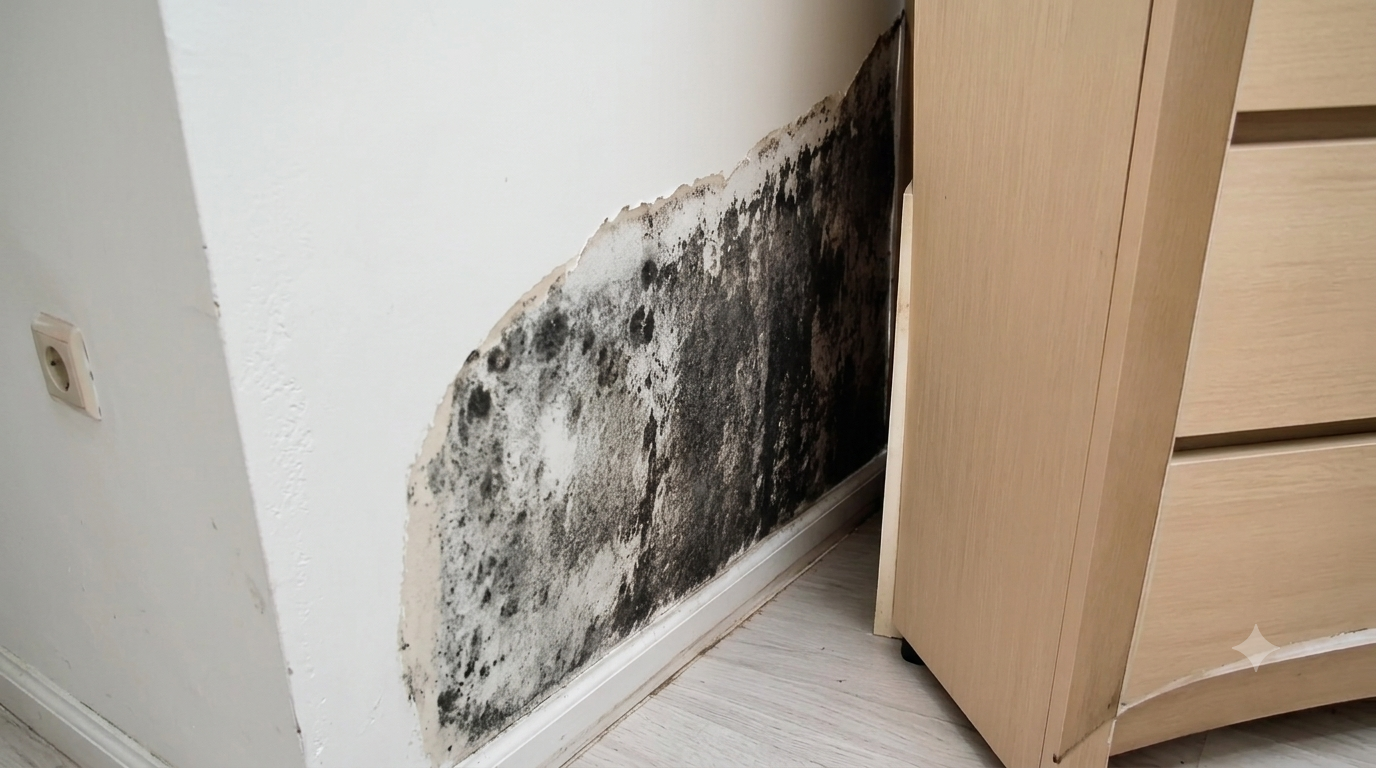
problems aren’t the ones you can see. This article walks through the specific hidden locations tends to grow in Singapore homes behind walls, under flooring, inside wardrobes, and within HVAC systems why these spots are so easy to miss, the early warning signs that point to hidden before it becomes visible, and how a room-by-room check can catch problems before they spread further. It closes with guidance on when a self-check isn’t enough and a professional inspection is the more reliable option.
Table of Contents
Why Hidden Mold Is More Common Than Visible Mold
By the time is visible on a painted wall or ceiling, it has often already been growing somewhere unseen for weeks. Visible is really just the part that’s reached a surface people can see the more established growth is frequently behind that surface, inside a cavity, or under a covering material like carpet or wallpaper.
This is especially relevant in Singapore, where high ambient humidity means moisture can accumulate inside wall cavities, under flooring, and inside enclosed furniture without ever needing a dramatic leak to trigger it. A slow, steady moisture source in an enclosed space is often worse than an obvious one, precisely because nobody catches it early see our guide on what actually causes mold to grow for the underlying conditions that make this possible.
Signs There’s Mold You Can’t See
Before getting into specific locations, it helps to know what typically signals a hidden problem, since these signs often show up before any is visible at all:
- A persistent musty smell that doesn’t go away with cleaning or ventilation, especially concentrated in one part of a room — if mold isn’t the obvious explanation, it’s worth checking what else commonly causes persistent household odours
- Peeling, bubbling, or discolored paint or wallpaper, which can indicate moisture trapped underneath
- Warped or soft flooring, particularly near walls, windows, or bathrooms
- Unexplained allergy or respiratory symptoms that improve when away from home and return once back
- Condensation that reappears quickly after being wiped, suggesting an ongoing moisture source rather than a one-off occurrence
- A cold or damp patch on a wall that doesn’t match the rest of the room’s temperature, which can point to moisture trapped behind the surface
None of these signs confirm mold on their own, but two or more appearing together, especially in the same area, is a strong indicator that something is happening behind the visible surface.
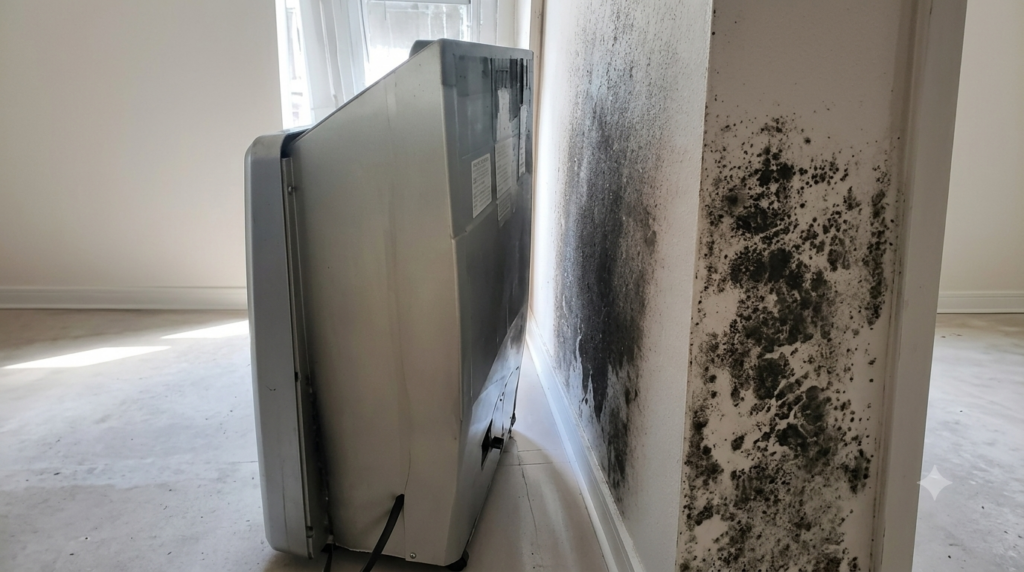
Hidden Places Mold Grows: A Room-by-Room Guide
Behind Walls and Inside Wall Cavities
Wall cavities are one of the most common hiding spots, particularly around plumbing lines, electrical conduits, or shared walls with bathrooms. A slow leak inside a wall can feed growth for months, with the only external clue being a faint smell or a slightly discolored patch of paint. In HDB flats and condos, shared wall structures mean the source of moisture isn’t always in the same unit where the mold eventually appears.
Under Flooring and Carpets
Moisture that seeps under laminate, vinyl, or carpeted flooring has nowhere to evaporate, creating a trapped, humid environment ideal for mold. This is particularly common near exterior doors, windows, or bathroom thresholds, where water is more likely to be tracked in or seep through gaps. Carpet padding, in particular, can hold moisture for a long time without any visible surface change. If the moisture source was a significant spill, leak, or flood, professional flood damage cleanup addresses drying beneath flooring in a way home cleanup usually can’t.
Inside Wardrobes and Cabinets
Built-in wardrobes and cabinets, especially those against exterior or bathroom-adjacent walls, restrict airflow and trap humidity. In Singapore’s climate, storing damp items — towels, gym clothes, umbrellas — inside a closed wardrobe can be enough to create localized mold growth on the interior surfaces or on stored fabric items themselves.
Behind Wallpaper
Wallpaper adhesive is an organic material mold can feed on, and wallpaper itself traps moisture against the wall surface underneath. growing behind wallpaper is often invisible until it causes visible bubbling, discoloration, or a musty smell, by which point it may have been growing for an extended period.
Inside Air-Con Units and Ducting
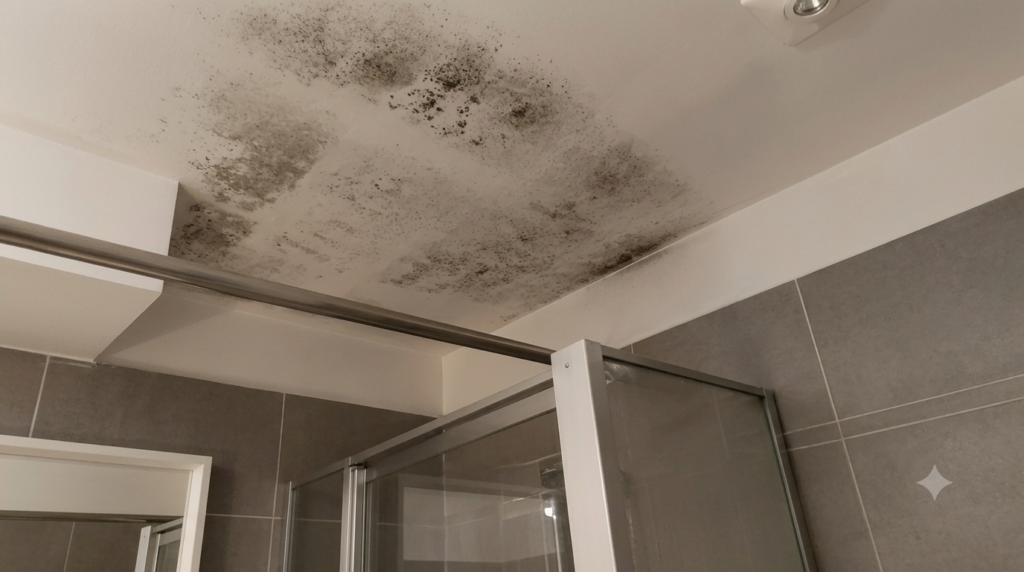
Air-con systems both cool and dehumidify air, but they also generate condensation continuously during operation. Mold can grow inside the unit itself, on internal components, or within ducting that runs through ceiling voids, and this can go unnoticed until it starts affecting air quality noticeably or producing a stale smell whenever the unit is running. Indoor air quality testing can pick up on this kind of contamination even before it’s noticeable by smell.
Under Sinks and Behind Appliances
Slow leaks under kitchen or bathroom sinks are frequently missed because the area is used for storage, and few homeowners regularly move everything out to check. Similarly, mold can develop behind or underneath appliances like washing machines and refrigerators, where minor condensation or drainage issues go unnoticed for long stretches.
Inside Ceiling Voids and Roof Spaces
In landed homes and some older condos, roof spaces and ceiling voids can develop mold from roof leaks, poor attic ventilation, or condensation forming on the underside of roofing material. These spaces are rarely inspected as part of routine home maintenance, which allows problems to develop over long periods without detection.
Behind Furniture Pushed Against Walls
Large furniture bookshelves, sofas, beds placed flush against exterior or bathroom-adjacent walls restricts airflow in the gap between the furniture and the wall. Over time, this creates a pocket of trapped, stagnant air where condensation and mold can develop, often going unnoticed until the furniture is moved for cleaning or relocation.
Why These Spots Get Missed
Hidden isn’t hidden by accident it consistently shows up in places that don’t get regular visual attention. Areas behind large furniture, inside closed storage, or within building structure aren’t part of typical daily observation. Homeowners also tend to associate mold risk with obvious water events, like a visible leak or a flood, rather than with slow, low-level moisture accumulation that doesn’t announce itself. And because many of these locations are enclosed, the musty smell that would normally alert someone to a problem can be contained within the space itself rather than spreading into the room and even once it does spread, professional odor removal addresses lingering smell that ventilation alone often can’t fully clear.
How Professionals Find Hidden Mold
Moisture Meters
Moisture meters measure the water content within a material such as drywall, wood, or flooring without needing to open it up. Elevated readings in a specific area can indicate a hidden moisture source even before any visible or damage appears.
Thermal Imaging
Thermal imaging cameras detect temperature differences across a surface. Because damp areas often have a different thermal signature than dry surrounding material, this technology can reveal patterns consistent with hidden moisture or, guiding inspectors to the right area without needing to open walls speculatively.
Air and Surface Sampling
When visible confirmation isn’t possible, air sampling can detect elevated spore counts in a room, indicating a source is present somewhere nearby even if it hasn’t been located yet. Surface sampling, taken from a suspected area, can confirm whether is present and sometimes identify the type.
Can You Check for Hidden Mold Yourself?
What You Can Reasonably Check
Homeowners can reasonably check some of the higher-risk spots without special equipment: pulling furniture away from walls periodically, checking inside wardrobes and under sinks for dampness or smell, looking at carpet edges near doors and windows, and paying attention to any musty smell that seems to concentrate in one part of a room. It’s also worth knowing the common visible signs of mold growth so you recognize a problem the moment it does become visible, and if what you find looks dark or black, our guide to what black mold actually looks like can help confirm what you’re seeing.
What Requires Professional Tools
Anything inside a wall cavity, under flooring that would need to be lifted, inside ducting, or within a ceiling void isn’t practical or safe to check without proper equipment. Moisture readings, thermal patterns, and air quality data also aren’t something a visual check can replicate these require the instruments professionals use specifically because they detect what isn’t visible.
What to Do If You Suspect Hidden Mold
If you’re noticing signs like a persistent smell, unexplained symptoms, or visible paint and flooring changes without an obvious cause, the most efficient next step is usually a professional inspection rather than repeated self-checking. An inspection typically starts by identifying the areas most likely to be affected based on the signs present, then uses moisture meters or thermal imaging to narrow down the actual source before anything needs to be opened up or disturbed. This approach tends to be faster and less disruptive than guessing, and it avoids the risk of missing a hidden source that will simply keep causing problems until it’s found.
7. FAQs About Hidden Mold in Your Home
1. How do I know if I have mold I can’t see?
Signs like a persistent musty smell, peeling or bubbling paint, unexplained allergy symptoms that improve away from home, and recurring condensation are common indicators of hidden mold, even without any visible growth.
2. Can mold grow inside walls without any visible leak?
Yes. High ambient humidity, condensation from temperature differences, or very slow, minor leaks can create enough moisture inside a wall cavity for mold to grow without any obvious external leak.
3. Is mold behind wallpaper common in Singapore homes?
It’s fairly common, particularly in older units, because wallpaper traps moisture against the wall and the adhesive itself can be a food source for mold.
4. How do professionals find mold without opening up walls?
Moisture meters and thermal imaging cameras can detect elevated moisture and unusual temperature patterns without needing to open a wall, helping narrow down the source before any invasive inspection is needed.
5. Can hidden mold affect my health even if I can’t see it?
Yes. Mold spores from hidden growth can still enter the air in a room, particularly if there’s any airflow path — a gap, vent, or crack — connecting the hidden area to the living space.
6. Should I move furniture to check for mold regularly?
Periodically checking behind large furniture against exterior or bathroom-adjacent walls is a reasonable habit, especially in Singapore’s humid climate, since these spots often go unchecked for long periods.
7. Is a musty smell without visible mold something to worry about
Yes, it’s one of the more reliable early indicators of hidden mold, since smell can develop before visible growth reaches a surface you can see.
8. What’s the difference between checking for hidden mold myself and getting an inspection?
A self-check can catch some accessible spots, like behind furniture or inside wardrobes, but can’t detect moisture inside walls, under flooring, or within ducting — those require the equipment a professional inspection uses.
If you’ve noticed black spots on your walls, ceiling, or bathroom surfaces, don’t ignore them. A professional inspection can identify the cause and prevent mold from spreading further.
Mold Free provides safe, effective mold inspection and remediation services across Singapore.