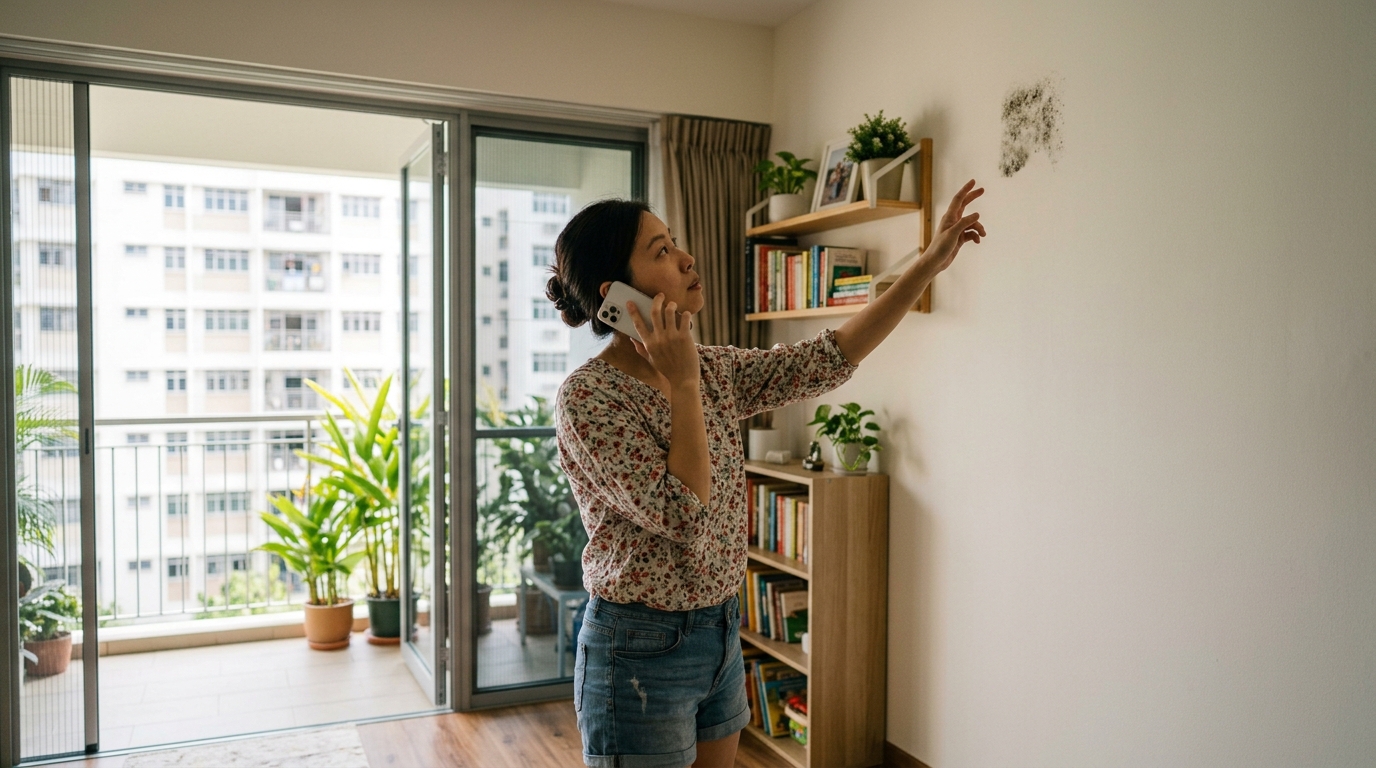
Not every mold problem needs a professional call — but knowing where that line actually sits is harder than it sounds. This article lays out the specific signals that indicate it’s time to bring in a mold removal company rather than continue with DIY cleaning, covers the situations where waiting can make things worse, and gives a practical self-check to work through before deciding either way.
Table of Contents
The Short Version: A Quick Self-Check
If you can answer “yes” to any of the following, it’s generally worth calling a professional rather than continuing with DIY cleaning:
- The mold covers an area larger than roughly a hand’s width
- It’s returned after you’ve already cleaned it once or more
- It’s on drywall, wood, fabric, or another porous material
- You can smell mold but can’t find where it’s coming from
- Someone in the household has symptoms that seem linked to being at home
- It followed a flood, leak, or other significant water event
- You’re involved in a property transaction where mold history matters
Each of these is covered in more detail below, but this list is a reasonable starting point if you want a quick answer before reading further. If you’re not even sure what you’re looking at is mold, our guides to common visible signs of mold growth and what black mold actually looks like are a good starting point before working through this list.
Signs It’s Time to Call a Professional
The Affected Area Is Larger Than a Small, Contained Patch
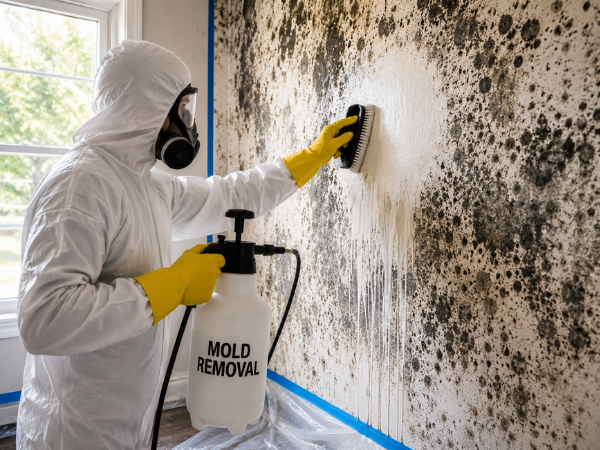
Small, isolated spots are the main scenario where DIY cleaning is genuinely reasonable. Once mold covers a larger area, spans multiple surfaces, or has spread beyond where it was first noticed, the odds that it’s already established itself more deeply than what’s visible go up significantly, and a professional assessment becomes more worthwhile than continued cleaning. Size alone isn’t the only factor, but it’s often the first, most visible signal that a problem has moved beyond a quick fix, particularly if the area has visibly grown since you first noticed it.
If you’re weighing whether your situation needs a professional or not, a quick conversation can usually settle it faster than continuing to guess. Contact Mold Free to discuss your situation.
Mold Keeps Coming Back After Cleaning
If you’ve cleaned the same spot more than once and it keeps returning, that’s a clear sign the underlying moisture source hasn’t been addressed — see our guide on what actually determines whether mold comes back for more on this pattern. Continued cleaning at that point mostly just delays dealing with the actual cause, which a professional inspection is better equipped to identify. It’s also worth noting that each cleaning cycle can disturb spores without necessarily resolving anything, meaning the practical value of repeated DIY attempts tends to decrease each time, even as the effort involved stays roughly the same.
The Mold Is on a Porous Material
Mold growing on drywall, wood, fabric, carpet, or similar porous materials often extends below the visible surface. Surface cleaning can remove what’s visible while leaving growth intact underneath, which is a strong reason to involve a professional for anything beyond a very small, contained patch on this type of material. This matters more than it might seem, because porous-material mold is one of the more common reasons homeowners are surprised to find a “resolved” problem has actually continued growing out of sight, simply because the visible symptom was addressed without the material itself being properly treated.
You Can Smell Mold but Can’t Find It
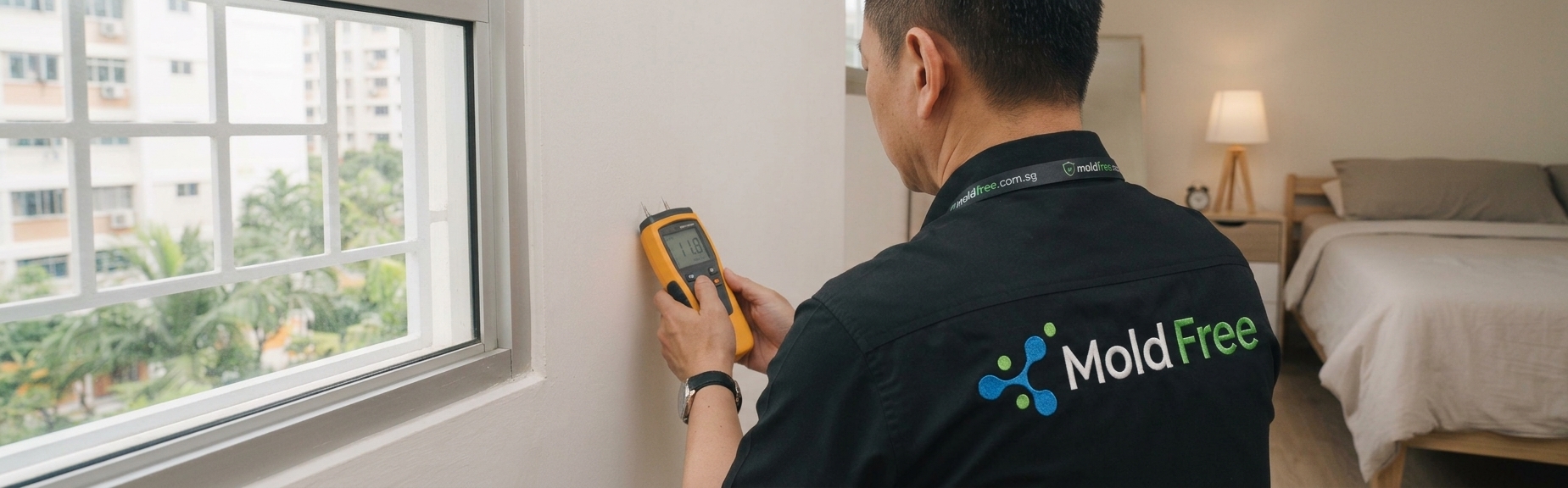
A persistent musty smell without any visible source usually means the mold is somewhere you can’t easily check — inside a wall, under flooring, or within ductwork, per our guide to hidden places mold can grow. This is a situation where professional tools like moisture meters and thermal imaging genuinely add value, since a visual search alone is unlikely to locate the source. Homeowners in this situation sometimes spend weeks checking obvious spots — behind furniture, inside cabinets — without success, when the actual source is somewhere that simply can’t be checked without the right equipment.
Someone in the Household Has Ongoing Symptoms
If a household member has symptoms that seem to worsen at home and improve elsewhere, professional involvement is worth considering sooner rather than later, alongside speaking with a healthcare provider about the symptoms themselves — see our fuller look at whether mold is dangerous to your health for context on which symptoms are worth taking seriously. This is especially relevant for children, elderly family members, or anyone with asthma, allergies, or a compromised immune system. In these situations, the priority generally shifts from “is this worth the cost of a professional” toward “how quickly can this be properly assessed,” since ongoing exposure while the cause remains unaddressed isn’t in anyone’s interest.
The Mold Followed Water Damage or a Flood
Mold that developed after a significant water event — a burst pipe, flooding, or a major leak — is more likely to involve a larger affected area than what’s immediately visible, since water tends to travel further than people expect, often following gravity and gaps in flooring or wall structure well beyond the original spill point. Professional assessment is generally the more reliable option in these cases, both for identifying the full extent of the problem and for proper drying to prevent further growth. This is one of the clearer-cut scenarios on this list, since the connection between a known water event and a resulting mold problem removes much of the ambiguity about whether professional involvement is warranted.
You’re Buying, Selling, or Renting Out the Property
If mold is a factor in a property transaction, having it professionally assessed and documented provides a clearer basis for decisions — whether that’s negotiating a sale, satisfying a buyer’s concerns, or ensuring a rental property meets a reasonable standard before new tenants move in. A documented professional assessment also tends to carry more weight in these situations than an informal description, since it gives all parties involved a shared, objective reference point rather than differing personal impressions of severity.
Commercial and Rental Property Considerations
Businesses and landlords face a slightly different calculation than owner-occupiers. In commercial settings — offices, retail spaces, schools, childcare centres — mold affecting shared or public-facing areas often warrants a lower threshold for calling a professional, both because more people are potentially exposed and because addressing it properly and promptly tends to be more straightforward to justify than managing ongoing complaints or concerns from staff, customers, or visitors. For landlords, mold reported by a tenant is generally worth treating as a call-worthy situation fairly quickly, since delays can affect the tenant relationship and, depending on the extent of the problem, the property’s condition and value.
Situations Where DIY Might Genuinely Be Enough
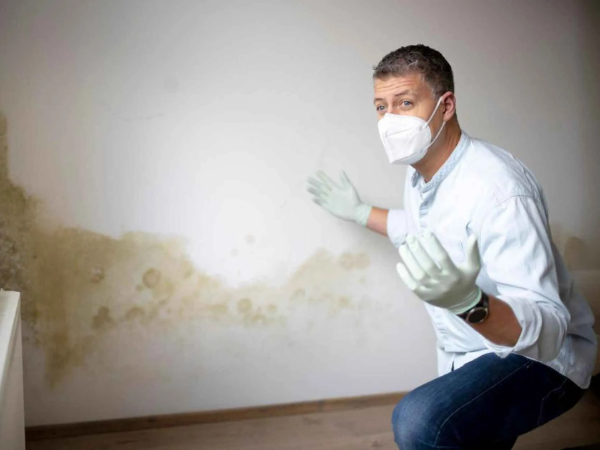
Not every mold spot needs a professional call. A small, isolated patch on a hard, non-porous surface — tile, glass, painted concrete — with a clear and already-resolved cause (for example, a wardrobe that was blocking airflow and has since been moved) is a reasonable candidate for careful DIY cleaning. See our full comparison of DIY vs professional mold removal for a deeper breakdown of where that line sits. The key markers are: the area is small and contained, the surface is non-porous, the cause is identifiable and has been addressed, and there’s no reason to suspect the problem extends beyond what’s visible.
Even in these cases, it’s worth treating the cleaning as a test rather than a guaranteed fix. If the same spot is still clear after a couple of weeks and the underlying cause hasn’t changed, that’s a reasonable sign the DIY approach worked. If it returns, that’s the signal to move from “handle it myself” to “call a professional,” rather than repeating the same cleaning process indefinitely.
A Quick Reference: Severity vs. Likely Action
| Situation | More Likely Reasonable Action |
| Small, hard-surface patch, cause identified and fixed | DIY cleaning, monitor afterward |
| Recurring mold after cleaning | Call a professional |
| Mold on drywall, wood, fabric, or carpet | Call a professional |
| Smell without visible mold | Call a professional |
| Symptoms linked to time at home | Call a professional and consult a doctor |
| Mold following a flood or major leak | Call a professional |
| Mold relevant to a sale, purchase, or tenancy | Call a professional for documentation |
This isn’t a strict rulebook, since real situations often involve more than one factor at once — but it’s a useful reference point when weighing a specific case against the signs described above.
What Happens If You Wait Too Long
Delaying professional involvement when one or more of the signs above are present generally doesn’t make the problem disappear on its own — it tends to give the underlying moisture source more time to cause further damage (see what actually causes mold to grow for why this matters), and gives mold more time to spread into additional material or areas. In porous materials particularly, growth that’s had longer to establish itself can sometimes require more extensive treatment, including material removal, than it would have if addressed earlier. Waiting isn’t automatically catastrophic, but it does tend to shift a problem from “manageable now” toward “more involved later,” which is worth factoring into the decision. There’s also a practical, less obvious cost to waiting: the longer a problem sits unaddressed, the harder it can become to pin down exactly when and why it started, which can complicate both the diagnosis and, in rental or sale situations, any conversation about responsibility for the underlying cause.
What to Expect From the First Call
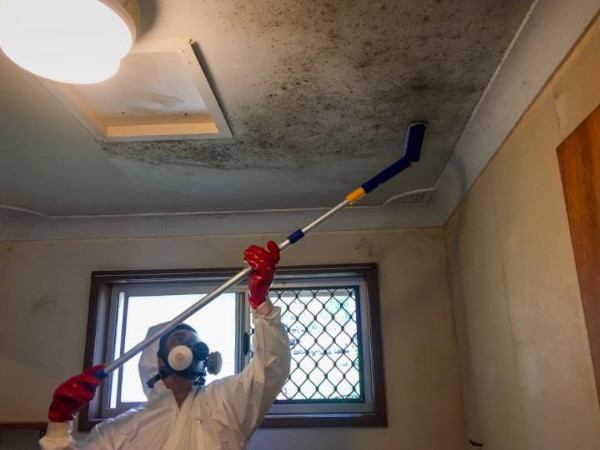
Reaching out doesn’t commit you to anything beyond a conversation. A reasonable first call typically covers a description of what you’re seeing (location, size, how long it’s been there, any relevant history like a recent leak), and from there, whether an in-person inspection makes sense —Mold Free’s mold removal process starts with exactly this kind of conversation. Having a few basic details ready before the call tends to make it more useful: roughly how large the affected area is, which material it’s on, how long it’s been present, whether it’s returned after previous cleaning, and whether there’s any known or suspected water source involved. If you’re curious what happens after that first call, our guide on the difference between mold removal and remediation covers what the actual process typically includes. This initial conversation is usually enough to get a sense of urgency and next steps, without needing to have already decided on a full course of action.
FAQs
1. Is it ever too early to call a mold removal company?
Generally no — an early call, even for something that turns out to be minor, is a reasonable way to get clarity, and catching a problem early is usually easier and less involved to resolve than waiting.
2. What if I’m not sure whether what I’m seeing is actually mold?
That uncertainty itself is a reasonable reason to reach out. Describing what you’re seeing is often enough for an initial assessment of whether an in-person inspection is worthwhile — our guide to what black mold actually looks like can also help you describe it more precisely.
3. Do I need to call a professional for every small mold spot?
Not necessarily. Small, isolated patches on hard, non-porous surfaces with a clear, already-resolved cause are a reasonable candidate for careful DIY cleaning.
4. Is calling a mold removal company only necessary for large infestations?
No. Some of the strongest reasons to call — a persistent smell without visible mold, symptoms that seem linked to being at home, or mold following a flood — aren’t about size at all, but about factors that are hard to properly assess without professional tools.
5. Should I call a mold company before or after trying to clean it myself?
If the mold matches any of the signs in this article — larger area, porous material, recurrence, unexplained smell, symptoms, or a recent water event — it’s generally more efficient to call first rather than clean and then call if it comes back.
6. Does it matter if the mold is in a rarely-used room?
Not really. A rarely-used room can actually make it easier for mold to go unnoticed and spread further before it’s found, since there’s less regular observation happening in that space, so the same signs described above still apply.
7. What should I have ready before calling about mold in a rental property?
It helps to have a general description of the affected area, when it was first noticed, and any relevant history (like a previous leak or a tenant complaint), along with photos if available, since this speeds up assessing whether an in-person inspection is the right next step.
8. Is a phone conversation enough to know if I need an inspection, or do I need one either way?
A phone conversation is usually enough to get an initial read on urgency and likely next steps, but for anything beyond a very minor, clearly-explained situation, an in-person inspection is generally what actually confirms the extent and cause of the problem.
Home Health & Mold Tips

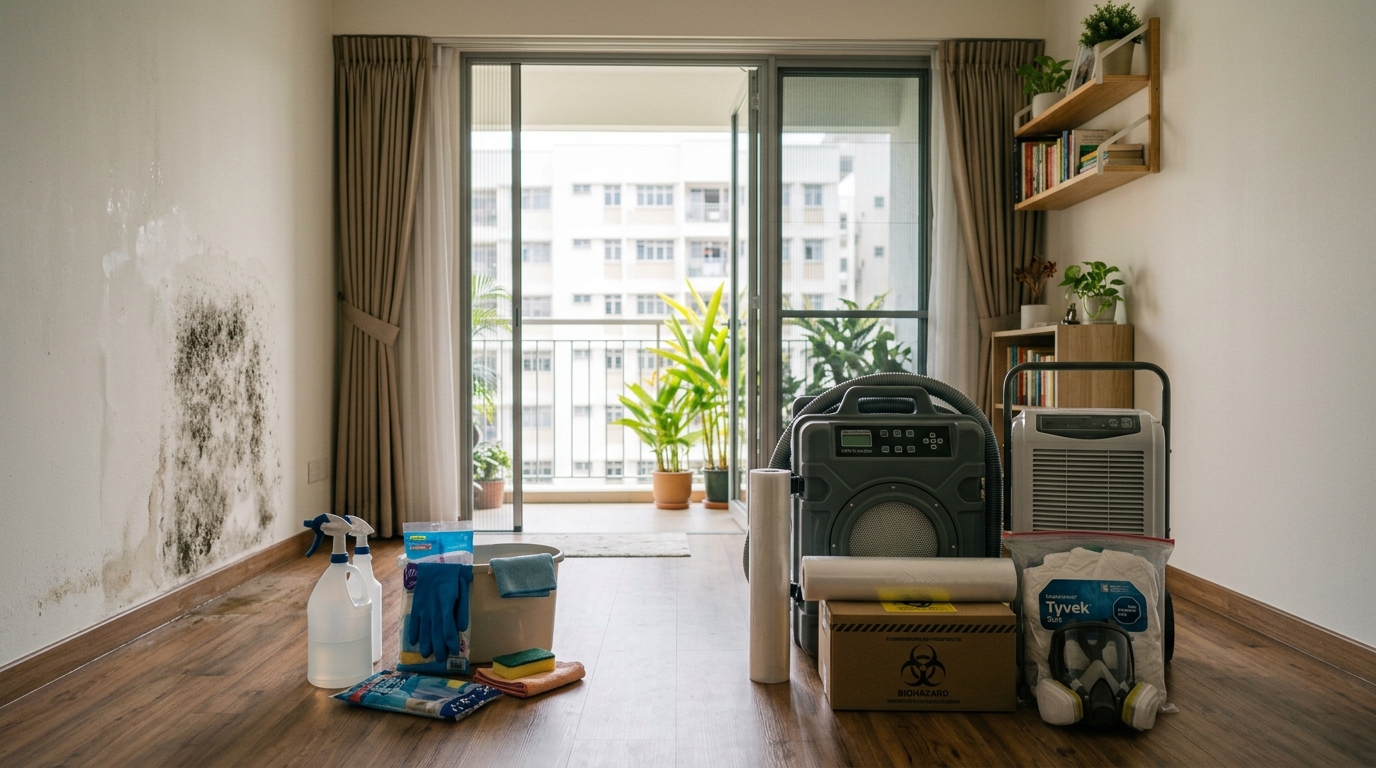

If mold keeps returning, is spreading, or is beyond what you can safely manage yourself, it may be time to call a professional. A proper inspection can help identify the extent of the problem and what needs to be done.