
Mold removal costs in Singapore vary significantly depending on the size, severity, and location of the problem. This article covers the general cost range homeowners can expect, the specific factors that push a job toward the lower or higher end of that range, what’s typically included in a professional quote, how to compare quotes meaningfully rather than just by price, and why unusually cheap quotes are worth extra scrutiny.
Table of Contents
The General Cost Range
Quick answer: Professional mold removal in Singapore generally costs between $500 and $4,000, depending largely on the size and severity of the mold problem and the area of the property affected. Small, contained jobs tend to sit toward the lower end of this range, while extensive, multi-room, or structurally complex problems can sit toward the higher end or beyond.
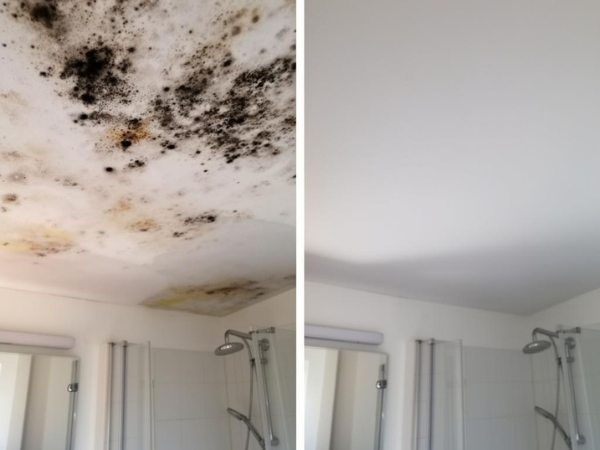
This is a wide range, and that’s intentional — mold problems vary enormously in scope, and a number without context (a single average figure, for example) tends to be more misleading than helpful. What matters more than the range itself is understanding which factors push a specific situation toward one end or the other.
How Severity Roughly Maps to the Range
Without inventing more precise figures than what’s actually verifiable, it’s reasonable to think about the published range in three general bands, based on the same factors discussed throughout this article:
- Lower end of the range — Small, contained, surface-level mold on hard materials, in an easily accessible area, with a clear and already-addressed cause
- Middle of the range — Moderate-sized problems, mold on porous materials like drywall, or situations requiring more containment or a less accessible location
- Higher end of the range or beyond — Extensive, multi-room problems, significant porous material involvement possibly requiring removal and replacement, or complex commercial jobs
This is a general way to think about where a specific situation might land, not a substitute for an actual quote based on an inspection, since two jobs that sound similar in a brief description can differ significantly once properly assessed.
Common Cost Misconceptions
“A bigger visible patch always costs more than a smaller one.” Usually, but not always. A small patch on a difficult-to-access material can sometimes cost more to properly resolve than a larger patch on an easily accessible, hard surface.
“The quote should be the same regardless of which company you ask.” Not necessarily, and a difference in quotes doesn’t automatically mean one company is overcharging. Differing scope, methods, and included warranty coverage are common, legitimate reasons for variation, as covered later in this article.
“Cost is mainly about labor time.” Labor is a factor, but the assessment, equipment, materials for containment and treatment, and any post-treatment testing or warranty coverage all contribute to the overall cost, not just the hours spent physically on site.
Potential Additional Costs Worth Asking About
Beyond the core treatment, it’s worth clarifying upfront whether the following are included or charged separately, since they can affect the total cost of a job: pre- and post-treatment testing, material removal and basic reinstatement (such as replacing a section of drywall), preventive anti-mold coatings, and any follow-up visit if mold returns within a warranty period. Asking about these directly when requesting a quote avoids surprises later and makes it easier to compare quotes on a like-for-like basis.
What Actually Drives the Cost
Size of the Affected Area
A small, isolated patch costs less to treat than mold that’s spread across an entire ceiling, multiple walls, or several rooms. Size is often the first and most visible factor in any cost estimate, since it directly affects how much containment, treatment, and cleaning is needed.
Severity and How Deep the Mold Has Spread

Surface-level mold on a hard material typically costs less to treat than mold that has penetrated porous materials like drywall, wood, or fabric, or that’s been growing for an extended period. More severe cases sometimes require partial material removal and replacement, which adds to the overall cost beyond cleaning and treatment alone.
Type of Material Affected
Hard, non-porous surfaces (tile, glass, painted concrete) are generally quicker and less costly to treat than porous materials, which may need more intensive treatment or partial replacement. A job involving mostly hard surfaces will typically cost less than one involving significant drywall or wood, such as plasterboard walls where growth often extends beneath the surface.
Accessibility
Mold in an easily accessible location costs less to treat than mold inside a wall cavity, behind built-in furniture, inside ducting, or in a ceiling void — the kind of hidden locations that require more careful access, sometimes more extensive containment, and more time.
Additional Services
Costs can increase depending on what’s included beyond basic treatment: air or surface testing before and after the job, preventive anti-mold coatings, humidity control recommendations or equipment, and any material removal and basic reinstatement. These are worth understanding as separate line items rather than assuming they’re automatically bundled into a base price.
What’s Typically Included in a Quote
A properly scoped quote should generally specify what’s covered: the inspection and assessment, containment setup, the treatment method for the affected area, cleaning and sanitization of the surrounding space, and any prevention measures like anti-mold coatings. It’s also worth confirming whether a recurrence warranty is included, and if so, what it covers and for how long — as covered in more depth in our guide on whether mold can come back after treatment. A vague quote that doesn’t specify these elements makes it harder to compare fairly against other quotes, even if the headline number looks similar.
Residential vs. Commercial Cost Considerations
Commercial jobs — offices, retail spaces, warehouses, schools — often involve larger areas, more complex building systems, and sometimes a need to schedule work around business hours to minimize disruption, all of which can affect cost beyond what a similarly-sized residential job would involve. Commercial clients may also require more formal documentation or reporting as part of the job, which is worth discussing directly when requesting a quote for a commercial property rather than assuming residential pricing patterns apply directly.
Why Quotes for the “Same” Job Can Vary Between Companies
Two companies assessing what looks like the same visible problem can arrive at different quotes for reasons that aren’t necessarily about one being overpriced and the other being a bargain. Differences can come from how thoroughly each company assesses the likely extent of hidden mold, what’s included in the base price versus offered as an add-on, the equipment and methods used, and whether a recurrence warranty is factored into the cost. This is why comparing quotes on scope, not just the final number, tends to give a clearer picture of value.
Is a Cheaper Quote Ever a Red Flag?
Not automatically, but an unusually low quote relative to others for a comparable job is worth a closer look rather than an automatic yes. It’s reasonable to ask what’s included, whether the price covers a full inspection and containment or just surface cleaning, and whether any warranty is included. Mold Free’s quotes are based on an actual inspection rather than a rough estimate, for exactly this reason. A quote that’s significantly lower because it skips diagnosis or containment isn’t necessarily a better deal — it may simply reflect a narrower scope of work that’s more likely to need repeating if the underlying cause isn’t addressed.
Does Home Insurance Cover Mold Removal Costs?
Coverage varies significantly by policy and by the cause of the mold, and it isn’t something this article can state definitively for any specific policy. Mold resulting from a sudden, covered event (like a burst pipe) is more likely to be considered under some policies than mold attributed to gradual issues like long-term humidity or lack of maintenance, but this depends entirely on the specific terms of a given policy. If cost is a significant factor in your decision, it’s worth checking directly with your insurer about what your policy covers before assuming either way, rather than relying on a general assumption.
DIY Cost vs. Professional Cost: The Real Comparison
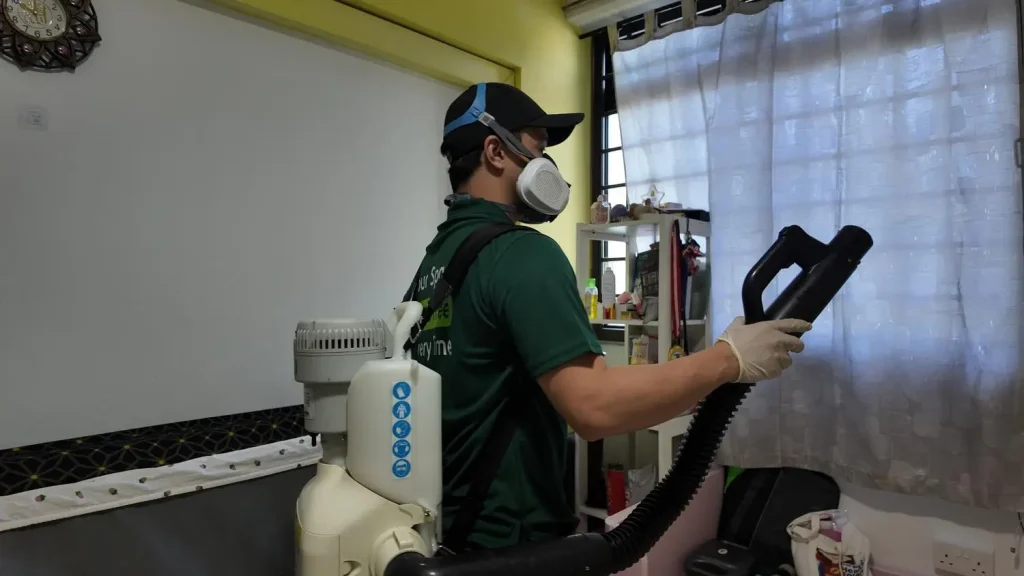
DIY cleaning has a lower upfront cost, generally just the price of cleaning products. As covered in more detail in our comparison of DIY and professional mold removal, this comparison can be misleading if the underlying cause isn’t resolved, since DIY attempts on situations that actually needed professional treatment often need to be repeated, adding up in both cost and time without resolving the problem. The more useful comparison isn’t “cheap DIY vs. expensive professional” in isolation, but the likely total cost over time for a specific situation, based on whether DIY is actually suited to it.
How to Get an Accurate Quote for Your Situation
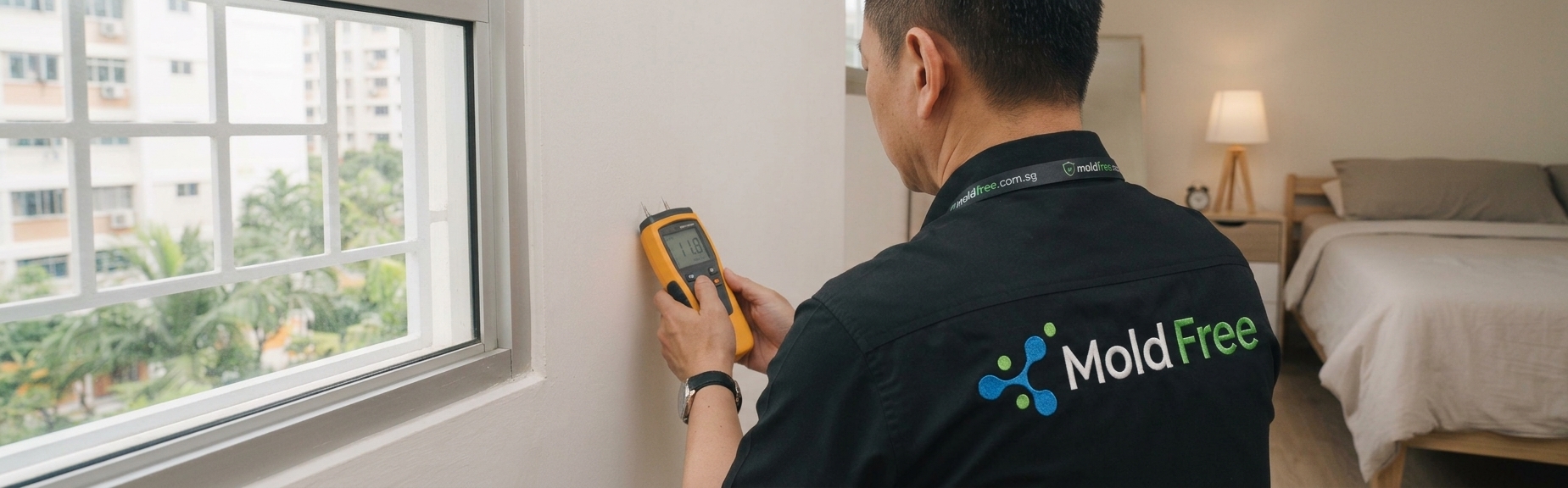
Because cost depends so heavily on factors that aren’t visible from a general description — extent of hidden growth, material involved, accessibility — the most accurate number comes from an in-person inspection rather than a phone estimate or a generic online calculator. This same inspection is also what determines how long the job will take, since cost and timeline are driven by largely the same factors. An inspection allows a company to see the actual extent of the problem and provide a quote based on what’s really there, rather than a rough guess that might not hold up once work begins.
FAQs About Mold Removal Costs in Singapore
What’s a typical price range for mold removal in Singapore?
Professional mold removal generally costs between $500 and $4,000, depending on the size and severity of the problem and the area of the property affected — see what actually causes mold to grow for context on why severity varies so much between homes. Small, contained jobs tend to be at the lower end, with larger or more complex jobs toward the higher end.
Why is there such a wide range in mold removal pricing?
Mold problems vary enormously in scope — a small bathroom ceiling patch and an extensive multi-room infestation require very different amounts of containment, treatment, and material work, which is reflected in a wide cost range rather than a single fixed price.
Does a mold removal quote usually include testing?
Not always. Testing (air or surface sampling) is often a separate service and should be confirmed as included or additional when comparing quotes.
Is it worth paying more for a company that offers a recurrence warranty?
A recurrence warranty is a reasonable factor to weigh against price, since it reflects confidence in the process and can save on repeat costs if the mold does return within the covered period.
Why do quotes for similar-looking mold problems sometimes vary a lot between companies?
Differences often come down to scope — how thoroughly hidden mold is assessed, what’s included in the base price, the equipment and methods used, and whether a warranty is factored in — rather than one quote simply being overpriced.
Should I be suspicious of a very low mold removal quote?
Not automatically, but it’s worth asking what’s included. A lower price that reflects a narrower scope — skipping proper diagnosis or containment, for example — isn’t necessarily better value if it increases the chance the problem needs to be addressed again.
Does commercial mold removal cost more than residential?
It can, particularly for larger properties, more complex building systems, or work that needs to be scheduled around business hours. Commercial quotes are generally best discussed directly rather than assumed from residential pricing patterns.
Does home insurance cover mold removal costs in Singapore?
It depends entirely on the specific policy and the cause of the mold. Coverage is more likely for mold resulting from a sudden, covered event than from gradual issues like long-term humidity, but this should be confirmed directly with your insurer rather than assumed.
Are pre- and post-treatment testing usually included in the quoted price?
Not always — testing is often a separate line item. It’s worth confirming whether it’s included or additional when comparing quotes, since this can meaningfully affect the total cost.
If I get several quotes with very different prices, how do I know which one is actually fair?
Rather than picking based on price alone, compare what each quote actually includes — the assessment method, containment, treatment approach, whether testing is included, and warranty terms. A fair comparison is scope-for-scope, not just number-for-number, since two very different prices can sometimes reflect two genuinely different levels of service rather than one being unfair.
Mold Knowledge Centre
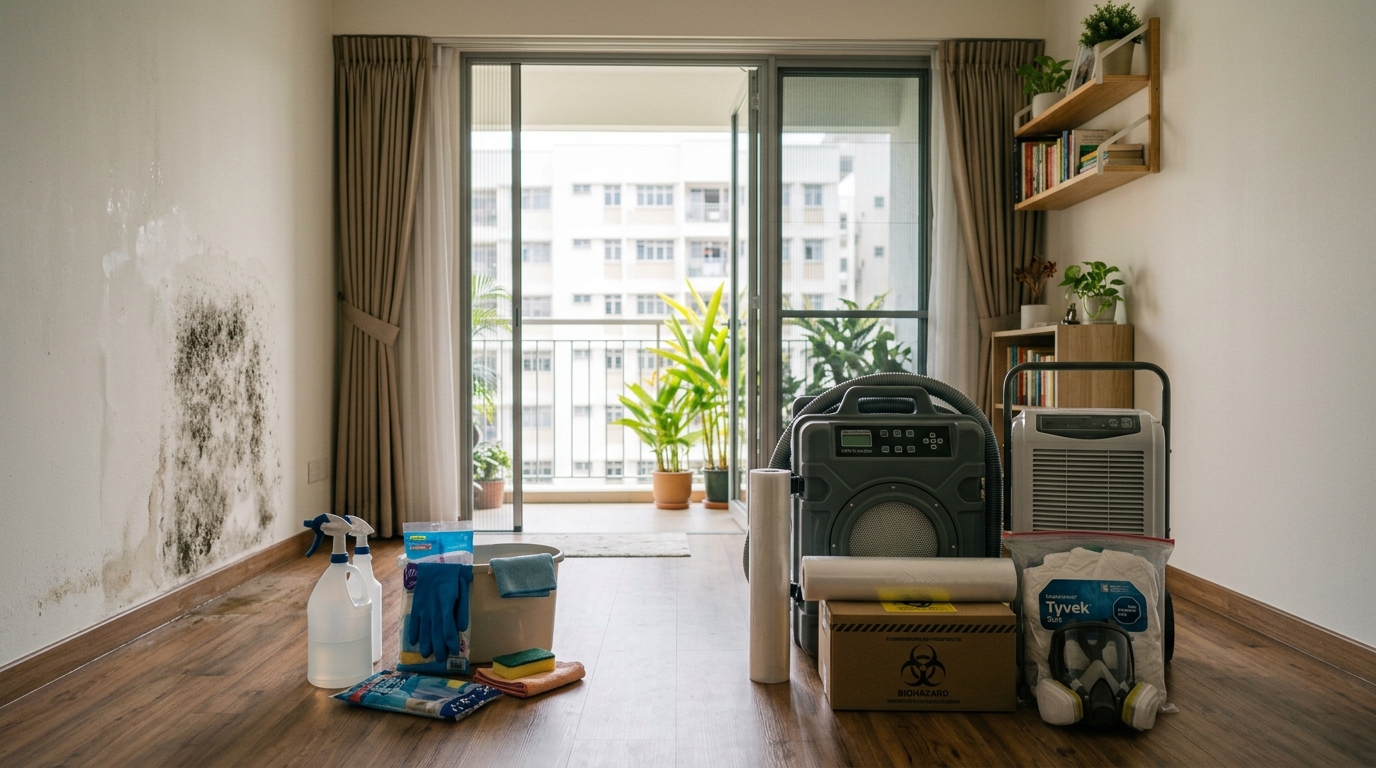


Every mold problem is different, and the right treatment depends on the size, severity and location of the affected area. Get a professional assessment and a clear quote based on your property’s specific needs.